
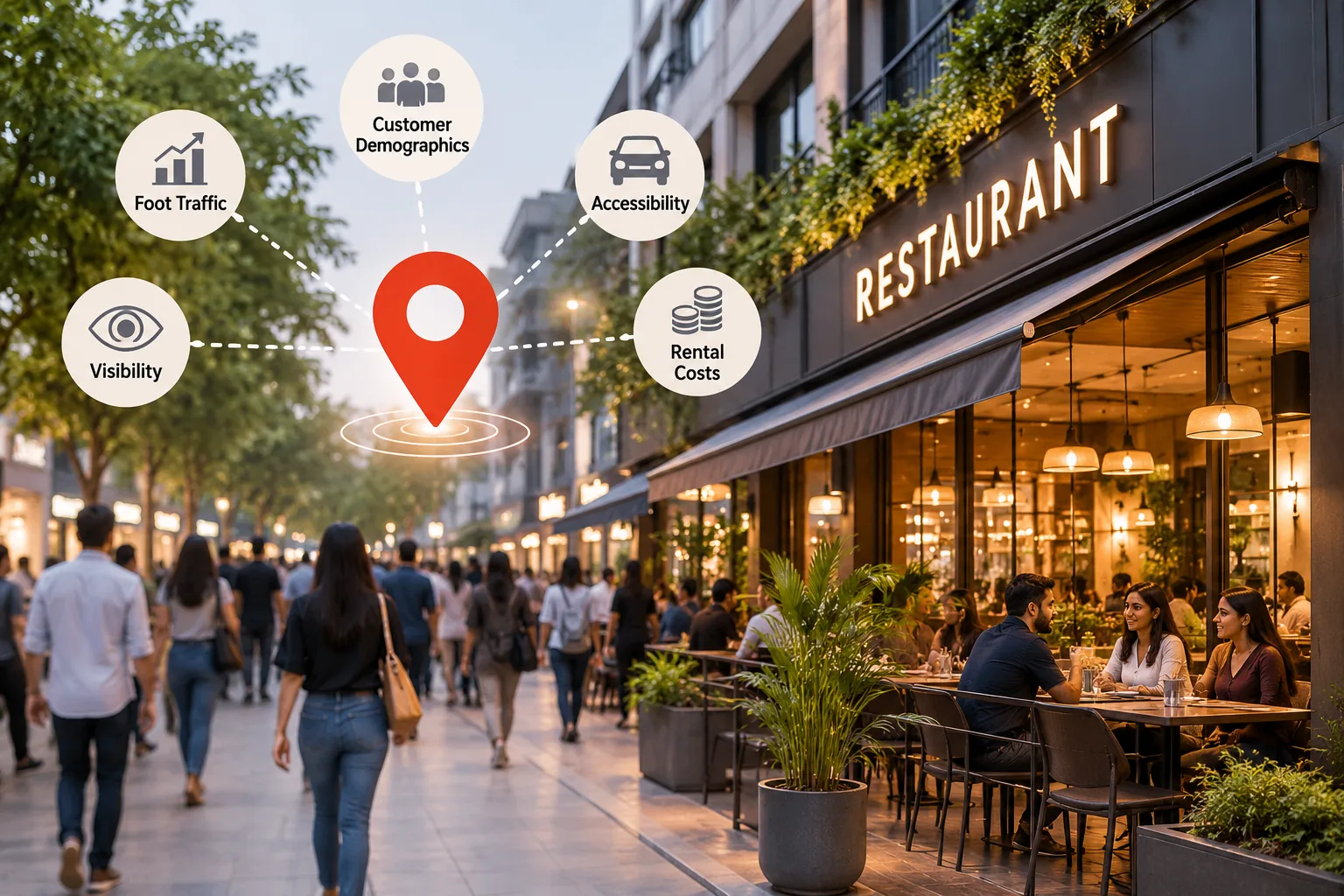
To choose a high-footfall location, count the number of passers-by at the entrance of your restaurant ahead of planned opening hours. Check what they buy nearby, how they pay and whether they can see and reach your door.
Two shops may face the same metro station, but they differ in the way customers reach and interact. One allows commuters to pick up breakfast on the way to the platform, while reaching the other one takes customers double back to the crossing. At Jaygee Hospitality, we help restaurant and cafe owners weigh vital details while shortlisting commercial spaces in India.
What makes a location high-footfall?
A high-footfall location is a spot where large numbers of people pass a fixed point, such as a shop entrance, over a set period. That raw count includes everyone. What matters is relevant footfall: people are likely to buy your food when you’re serving it.
Office districts show the gap. A tower that empties at 6 pm swells the street’s daily count, but if you sell thalis at lunch, only 1 to 2 pm matters. Do workers turn towards your door? If the building has a subsidised canteen, many won’t leave the premises at all.
What should you check before you sign a lease?
Customers and prices
Ask regulars at busy lunch counters nearby what they order and pay. If your set lunch costs ₹350, find out how often they spend that much.
Visibility and access
Check the frontage from both directions and ask what signage the landlord allows. Walk to the door from the metro exit and the car park. Can a guest using a wheelchair get in?
Neighbouring businesses
Find out when nearby offices, colleges and shops close. A cinema whose last show ends after 9 pm could support a dinner service you hadn’t planned.
Competition
Visit similar outlets during your planned trading hours and compare prices, queues and empty tables. One full competitor proves demand exists. Five near-identical cafes on one stretch suggest it’s already met.
Rent and running costs
Say a corner unit costs ₹45,000 a month more than a mid-block one. If each order leaves ₹150 after ingredients, packaging and other variable costs, you need 300 extra orders a month, about ten a day, to cover the difference. Wages, utilities and maintenance charges come on top.
Kitchen fit
Check for an exhaust route and enough electrical load for your equipment. Both are expensive to fix after signing. At Jaygee, we help assess sites and negotiate leases for F&B businesses, based on the years of operation in commercial real estate.
Which locations suit which restaurant and cafe formats?
Each setting draws its crowd at its own hours, so start with your concept. A high-footfall location for a cafe near a school might see more parents after the morning drop-off and go quiet by evening.
Setting | Format to test | What to check |
High street or market | Chaat and cold drinks for shoppers | Whether shoppers pause on your stretch |
Mall or commercial complex | Quick-service counter for groups | Food court visitors passing the unit |
Office district | Quick thali for office workers | Canteen prices and Friday attendance |
Residential or mixed-use area | Family dinners and takeaway | Where residents buy food on the walk home |
College area | Affordable snacks to share | Term dates and what sells between classes |
Metro station | Coffee and breakfast to carry | The route commuters take to the platform |
Cinema or entertainment centre | Late desserts for groups | Which exit do people use after the last show |
How do you evaluate footfall before finalising a property?
Stand outside each shortlisted entrance for matching 15-minute slots at breakfast, lunch, dinner and one quiet period. Repeat on two weekdays and a weekend day.
Count everyone passing on your side of the street. Outside a similar outlet, note how many people approach and how many go in, and ask a few diners what they spent. Note any rain or roadworks that distort the count. If access or ventilation is in doubt, get a professional site assessment.
Which location mistakes cost restaurant owners money?
The most common is signing because of a Saturday queue. It might come from a one-day discount or a slow kitchen, and a line for ₹90 dosas says nothing about demand for a ₹400 brunch. Go back on an ordinary weekday.
Opening beside three cafes with the same menu splits a fixed pool of customers. Park there yourself instead of viewing from the landlord’s car, check the frontage after dark and ask about rent escalation. If your forecast needs full tables every night, the site is too expensive.
Making the right location decision
Take your footfall counts and monthly costs to the final viewing. The right site is one your customers reach easily, at a rent you can cover in a slow month.
Still stuck between options? Talk to Jaygee Hospitality’s commercial leasing team about your concept and budget.
FAQS
What is considered a high-footfall location for a restaurant?
There’s no fixed number. Divide your monthly break-even orders by your trading days, then check whether enough of the right people pass during your main meal hours to deliver that.
How do I find a high-footfall location for a cafe?
Start near metro exits and office clusters, where a coffee habit already exists. The Google Maps ‘Popular times’ graph for neighbouring outlets shows when an area peaks, and malls often share footfall data with prospective tenants.
Is a high-footfall location always better for a restaurant?
No. Footfall matters most for impulse formats like takeaway coffee and snacks. A destination restaurant with steady dinner bookings can do better on a quieter, cheaper street than on a costly corner.
How can restaurant owners measure footfall in a commercial area?
Use a tally counter and multiply a 15-minute count by four for a rough hourly figure. For longer periods, some malls and data providers track footfall through door sensors or mobile location data.