
Restaurant Lease Agreement: Key Terms Every F&B Business Owner Should Check
The restaurant rent fits your budget, the shopfront has potential, and you can picture the opening night already. But it’s important to understand what a restaurant lease agreement commits your business to in terms of costs and operating conditions. For an F&B outlet, kitchen infrastructure, exhaust access, trading hours, signage, licensing and fit-outs all matter. Thus, reviewing the restaurant lease agreement terms can help you spot problems before they spiral out of control. Lease Term and Lock-In Period Check the total tenure, lock-in, termination notice and renewal conditions. The lease duration should offer your investment in interiors, kitchen equipment and branding a realistic chance to earn a good return. So, check what happens for different scenarios, like if you exit the lease agreement during the lock-in period, including compensation or deposit deductions. Have a lawyer assess the potential liability. Confirm when the lock-in starts, which parties it binds and whether exceptions apply if required approvals cannot be obtained. Rent, Security Deposit and Escalation Clause Rent Confirm monthly rent, the payment date and separate maintenance or common-area maintenance (CAM) charges. If revenue sharing applies, check how sales are calculated. Security Deposit Record the amount, permitted deductions and refund deadline after handover. “Refundable” needs a clear settlement process. Specify evidence for deductions and how normal wear will be treated. Rent Escalation Check the percentage, frequency and first increase date. Know whether each increase applies to the original rent or the rent then payable. Calculate total occupancy cost, including recurring charges and applicable taxes. Budget separately for upfront outlays, including the deposit. For example, ₹1 lakh rent plus ₹15,000 CAM means ₹1.15 lakh monthly before utilities and applicable taxes. Permitted Use and F&B-Specific Restrictions Confirm that the property’s approved use and lease permit your preferred format, like restaurant, café, bar, lounge or cloud kitchen. A broad “commercial use” clause will need closer checking. Additionally, check the permissions for cooking, commercial kitchen operations and customer seating. Review restrictions on cuisine, operating hours and alcohol service, alongside society, mall and landlord rules. Remember, a good location will not rescue a concept the premises cannot legally support. Fit-Out, Renovation and Modification Rights Get written approval for interiors, kitchen installation, exhaust routing, ventilation, electrical upgrades, plumbing and drainage, signage and branding. Determine what structural changes require landlord and authority approvals. For example, kitchen installation permission may not cover running an exhaust duct through a common area. Record the route and access rights. Check that available electricity capacity can support your proposed equipment. Agree on approval timelines, any rent-free fit-out period, the rent commencement date, and who pays to remove installations or restore the premises at the exit. Photograph the premises at handover. Maintenance, Repairs and Operating Responsibilities Define the landlord’s obligations for structural repairs and for shared water, drainage and electrical infrastructure. Separately list the tenant’s duties for kitchen equipment, internal fittings, utility servicing and routine upkeep. Confirm any exceptions in writing. State who arranges repairs, pays and responds to urgent failures. Define what CAM covers so the same work is not charged twice. A blocked shared drain can stop service while both parties argue over the repair bill. Renewal, Exit and Termination Clauses Set out renewal rights, notice deadlines, revised rent and extension conditions. Check how notice must be delivered and whether unpaid charges affect eligibility. Record the renewal process in the agreement. Review exit rights during and after lock-in, required notice, breach consequences and time allowed to correct a breach. Agree deposit settlement, equipment removal and handover requirements. Footfall, competition and operating costs can change. Your restaurant lease terms should make the cost and process of leaving clear. Other Charges and Hidden Costs to Check Ask for a written schedule covering: CAM and maintenance charges Property taxes, where contractually payable Utilities Parking charges Signage charges Other common-area charges GST and other applicable taxes Brokerage, stamp duty, registration and documentation costs Pro tip: Check every recurring and one-time charge before signing, including charges payable during fit-out. Ask how variable charges are calculated and revised. Restaurant Lease Agreement Checklist Before Signing ✓ Lease tenure ✓ Lock-in period ✓ Rent and escalation ✓ Security deposit ✓ Permitted F&B use ✓ Operating hours ✓ Fit-out permissions ✓ Exhaust, power, water and drainage ✓ Maintenance responsibilities ✓ Renewal terms ✓ Exit and termination conditions ✓ Handover/restoration requirements How an F&B Leasing Consultant Can Help An F&B leasing consultant connects property evaluation with the commercial details of your agreement. Jaygee Hospitality supports lease-term review, rent and escalation evaluation, negotiations, F&B infrastructure checks, documentation coordination and site handover. When shortlisting a restaurant space for lease, assess operational suitability before committing. Use a qualified legal professional for formal legal advice and agreement review. Opening a restaurant, café, bar or another F&B outlet? Talk to Jaygee about Legal & Lease Agreement Support before finalising your commercial lease. FAQs: What should I check in a restaurant lease agreement before signing? Review tenure, lock-in, rent, escalation, deposit, permitted use, fit-out rights, maintenance, renewal, exit and restoration obligations. What is a lock-in period in a restaurant lease? It is the agreed period restricting early termination. Check which parties are bound, any exceptions, and the potential costs of early exit. Can a restaurant lease agreement include restrictions on kitchen operations? Yes. Restrictions may cover cooking methods, exhaust systems, fuel, working hours and waste disposal. Check them against your menu and service model. Why should F&B businesses get professional lease support? Professional support helps assess costs, infrastructure and negotiated terms. A commercial lease agreement for restaurant premises needs both operational and legal scrutiny.
How to Find the Right Commercial Real Estate in Dubai for an F&B Business
Finding the right commercial real estate in Dubai for an F&B business involves much more than choosing a busy location. The right property needs to match your concept, target audience, operational requirements, budget, licensing needs, and long-term expansion plans. For restaurants, cafés, bars, lounges, and other food and beverage businesses, the property itself can significantly influence visibility, customer accessibility, operating costs, and the overall potential of the concept. If you are planning to launch or expand an F&B business in Dubai, here are the key factors to consider before finalising a commercial property. 1. Start With Your F&B Concept Before searching for a property, clearly define your business concept. A quick-service restaurant, premium café, fine-dining restaurant, cloud kitchen, bakery, or lounge can have very different property requirements. For example, a café may benefit from pedestrian visibility and outdoor seating, while a delivery-focused kitchen may prioritise access for delivery riders and efficient kitchen infrastructure. Consider: Type of F&B concept Target customer profile Seating capacity Required kitchen size Delivery requirements Operating hours Parking requirements Outdoor seating requirements Expected customer volume Having these requirements defined makes it easier to shortlist properties that actually suit your business. 2. Choose the Location Based on Your Target Audience Location is one of the most important factors when evaluating commercial real estate in Dubai. However, the busiest location is not automatically the right location. A premium site with high rent may not make sense if your target customers do not live, work, or spend time in that area. Evaluate the location based on: Customer demographics Residential and office catchment Tourist activity Pedestrian movement Road accessibility Public transport connectivity Nearby attractions and businesses Parking availability Competition in the surrounding area Think about where your customers are likely to come from and whether the location supports your expected sales model. 3. Check Whether the Property Is Suitable for F&B Use One of the biggest mistakes businesses can make is assuming that any commercial property can be converted into a restaurant or café. Dubai has land-use classifications and regulations that determine which activities can operate in particular areas. Restaurants and cafeterias are permitted in certain commercial and mixed-use zones, subject to applicable requirements Before signing a lease, verify that the proposed activity is permitted at the property and that the premises can satisfy the relevant approvals and technical requirements. This should include checking: Permitted commercial activity Existing approvals Building-use classification Kitchen requirements Exhaust and ventilation feasibility Fire and safety requirements Waste management provisions Parking and loading access 4. Evaluate the Property’s F&B Infrastructure A property that already has suitable F&B infrastructure can potentially reduce the time and cost involved in setting up the business. During the site inspection, assess whether the property has or can accommodate: Commercial kitchen infrastructure Adequate electrical capacity Water supply and drainage Exhaust and ventilation systems Grease traps where required Gas arrangements, if applicable Storage areas Waste disposal facilities Delivery access Customer parking Do not evaluate the property only by its floor area. Two spaces with the same size can have very different commercial potential depending on their layout and existing infrastructure. 5. Calculate the Total Occupancy Cost Rent is only one part of the cost of securing commercial real estate in Dubai. Your financial assessment should consider the complete occupancy cost, including: Annual rent Security deposit Service charges Fit-out costs Utility expenses Maintenance Licensing and approval-related costs Signage costs Insurance Other landlord or building charges A property with a lower headline rent may require significant renovation or infrastructure investment, while a more F&B-ready property could reduce initial fit-out requirements. Compare properties based on their total cost of opening and operating, not rent alone. 6. Review the Lease Terms Carefully Before signing a commercial lease, review the lease duration, rent, payment terms, renewal conditions, permitted use, maintenance responsibilities, and other contractual obligations. Dubai’s Law No. (26) of 2007 sets out provisions governing landlord-tenant relationships, including requirements relating to lease contracts. The law states that lease contracts should specify details such as the property, purpose, term, rent, and payment method. For an F&B business, also pay close attention to: Lease duration Rent escalation Payment schedule Security deposit Renewal conditions Fit-out period Permitted business activity Assignment or transfer conditions Maintenance responsibilities Termination clauses Signage rights Outdoor seating provisions Exclusivity clauses, where applicable Professional review of the lease can help identify conditions that may affect your business later. 7. Assess Visibility, Access and Parking For many F&B concepts, customers need to be able to find and access the property easily. During a site visit, check the property at different times of the day. Look at traffic movement, pedestrian activity, visibility from the road, parking availability, entry and exit points, and accessibility for delivery vehicles. For restaurants and cafés, parking can be particularly important. Dubai’s land-use regulations can also prescribe parking and loading requirements for certain commercial developments and restaurant properties. A beautiful property that customers struggle to access may not perform as expected. 8. Study the Competition and Surrounding Businesses The businesses around your proposed property can provide valuable information about the location. Look at: Direct competitors Complementary F&B brands Supermarkets and retail outlets Offices Hotels Residential communities Entertainment destinations Schools and other customer-generating establishments A cluster of successful F&B businesses can indicate an established customer market, while an area with limited competition may offer an opportunity—but only if sufficient demand exists. The key is to understand why customers visit the area and whether your concept fits into that ecosystem. 9. Work With an F&B-Focused Commercial Real Estate Partner Finding a property is only one part of the process. Understanding whether that property actually works for your F&B concept is equally important. Jaygee Sun Hospitality Management LLC supports F&B businesses in evaluating commercial opportunities and finding spaces aligned with their business requirements. Its approach focuses on factors such as location, customer profile, property suitability, visibility, and long-term value rather than simply matching businesses with available spaces. Working with an F&B-focused advisor can help businesses shortlist relevant properties, evaluate
Restaurant Lease vs Buying Commercial Property: Which Is Better in India?
Planning to open a restaurant in India? It is important to understand that choosing the right property model is crucial. It is not just any choice. Instead, it is something that can determine your restaurant’s capital needs, growth, risk, and flexibility. What factors does this choice depend upon? Well, it depends on various factors like concept, location, budget, tenure, and your expansion plans. And ideally, the property you choose must meet the demands of an F&B business. In this blog, we’ll break it all down for the reader. Restaurant Lease vs Buying Commercial Property: What’s the Difference? Leasing means using a commercial property for an agreed period while paying rent and applicable charges. The restaurant does not own the premises. Buying means purchasing the property and becoming its owner. This requires greater capital but gives the business control over the asset. Leasing a Commercial Property for a Restaurant Advantages of Leasing Leasing can preserve capital. Lower upfront investment More funds for setup and operations Greater flexibility to relocate Easier entry for new or growing brands Access to premium locations without purchasing Disadvantages of Leasing The trade-off is a recurring expense. Recurring rent Rent escalation Lock-in and renewal considerations Dependence on landlord and lease terms No direct benefit from property appreciation Buying Commercial Property for a Restaurant Advantages of Buying Buying can suit established businesses. Ownership of the property Potential appreciation Greater control over premises Reduced relocation risk Long-term business asset Disadvantages of Buying Ownership requires substantial capital. High initial investment Capital locked into real estate Stamp duty, registration and maintenance Relocation can be more difficult Ownership does not guarantee profitability Restaurant Lease vs Buying Commercial Property: Key Comparison Factor Leasing Buying Initial investment Lower Higher Monthly expense Rent Loan, maintenance, and property costs Flexibility Higher Lower Ownership No Yes Capital requirement Lower Higher Relocation Easier More difficult Long-term asset No Yes Property appreciation No direct benefit Potential benefit Best suited for New or growing brands Established businesses What Should Restaurant Owners Consider Before Choosing? Here are some things that would-be restaurant owners need to assess: Available capital and working capital needs Tenure Location and footfall Restaurant format Expansion plans Revenue and occupancy costs Appreciation potential Lease terms and escalation clauses Technical suitability For an F&B property, technical checks are critical. Review water and drainage, power load, exhaust and ventilation, accessibility, and local licensing requirements. At Jaygee Hospitality, we highlight these factors during our property evaluation. When Is Leasing Better for a Restaurant? Leasing may suit the following: First-time restaurant owners New concepts testing a market Brands entering a new city Businesses planning rapid expansion Brands targeting premium locations without buying Businesses preserving capital for operations In a nutshell, it preserves capital for growth. When Is Buying Better for a Restaurant? Buying may suit the following: Established restaurant brands Businesses planning to stay for many years Owners with sufficient surplus capital Businesses seeking long-term asset creation Locations where ownership offers strategic value Compare expected restaurant returns with capital committed to property. Lease vs Buy: Which Option Is Better for Your Restaurant? For this, there is no universal answer. Leasing may be better when flexibility, lower upfront investment, and expansion matter most. Buying may suit businesses seeking stability, control, and potential asset creation. Base the decision on both the restaurant business plan and the property’s investment potential. Neither low rent nor an attractive purchase price guarantees success. How Can an F&B Real Estate Consultant Help? At Jaygee Hospitality, we help restaurants, cafés, bars, lounges, and cloud kitchens identify suitable commercial spaces. Our service and support cover location sourcing, property evaluation, negotiations, legal paperwork, and site handover. An F&B real estate consultant in India can help: Identifying restaurant spaces Evaluating locations and properties Assessing F&B infrastructure Comparing leasing opportunities Supporting lease negotiations Assisting with documentation Finding locations for expansion At Jaygee Hospitality, we also work as an F&B leasing consultant and restaurant expansion partner, evaluating visibility, accessibility, infrastructure, and business potential. Final Verdict Leasing offers flexibility and lower upfront investment, while buying provides ownership, control, and potential long-term asset value. Neither is automatically better for every restaurant. Evaluate capital, location, tenure, expansion plans, and property potential before deciding. F&B real estate guidance can make the process more informed. FAQs Is it better to lease or buy a commercial property for a restaurant? It depends on your capital, tenure, flexibility, location strategy, and long-term business goals. What are the benefits of leasing a restaurant space in India? Leasing needs less upfront capital and offers flexibility for expansion, relocation, and market testing. What should I check before buying a commercial property for a restaurant? Check location, permitted use, infrastructure, accessibility, operating costs, customer catchment, and investment potential. Is buying commercial property a good investment for restaurant owners? It can suit established businesses with capital, long-term plans, and confidence in the location. How can an F&B real estate consultant help with restaurant property selection? A consultant can source and evaluate properties, assess F&B suitability, compare options and support negotiations.
How Much Does It Cost to Open a Restaurant in Dubai in 2026?
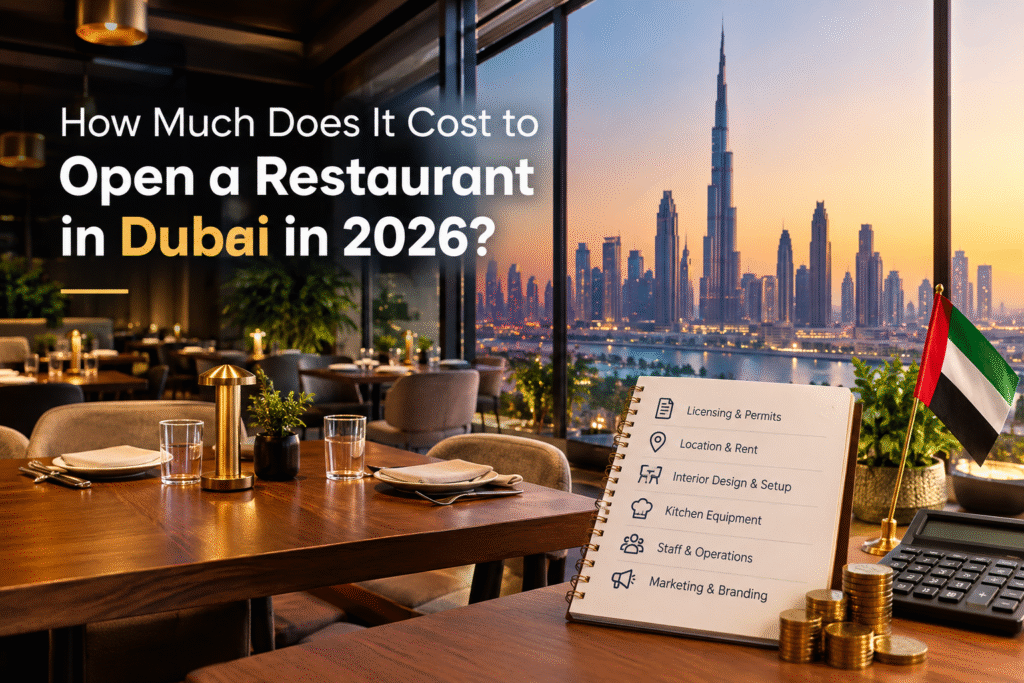
The cost to open a restaurant in Dubai depends on the size, restaurant format (cloud kitchen, cafe, casual dining, formal dining, etc.), location, fit-out, and operating model. In 2026, rent, equipment, licensing, and payroll together make up restaurant opening expenses in Dubai. However, the most crucial step is evaluating the property as investing in an unsuitable premise often attracts high construction costs and even limits sales. What Is the Average Cost to Open a Restaurant in Dubai in 2026? There is no official figure, but based on various advertised property deals, the average cost of opening a restaurant in Dubai ranges from AED 900,000 to 2.2 million. But this is not a citywide average, as prices vary according to restaurant formats. Opening a cafe or a QSR (Quick Service Restaurant) is economic, while a more premium-themed restaurant costs more. The table below illustrates a budget across various cost categories and planning ranges. Cost Category Planning Range (in AED) Commercial space / annual base rent AED 150,000–400,000 Business setup & licensing AED 20,000–50,000 Interior & fit-out AED 300,000–825,000 Kitchen equipment AED 100,000–250,000 Extra furniture, décor & signage AED 20,000–60,000 Staff recruitment & pre-opening payroll AED 60,000–120,000 Inventory, POS & opening operating expenses AED 35,000–80,000 Marketing & launch AED 30,000–80,000 Working capital AED 150,000–300,000 Note: Add deposits, taxes, contingency, and takeover payments, and count fit-out inclusions once to your budget plan. Working capital is calculated assuming three months’ cash shortfall, excluding any funded rent. Major Costs Involved in Opening a Restaurant in Dubai Opening a restaurant in Dubai is similar to starting a construction project. So, it helps to break down the major costs. Commercial Property and Restaurant Rent Compare the costs of opening a restaurant in Dubai across malls, high streets, and emerging neighbourhoods. Assess restaurant space for rent by taking into account key factors like visibility, access, target customer groups, and surrounding businesses. Business Registration and Licensing Costs Company setup and licence charges depend on the structure and location of the restaurant. The first step is to check Dubai Municipality’s food-related approvals and get itemised quotes. Restaurant Fit-Out and Interior Costs While basic restaurant fit-outs can be achieved with standard finishes, mid-range fitouts call for custom work. Premium interiors demand procuring bespoke materials (hence increased expenses). The main items include flooring, seats, lights, plumbing, and other mechanical or electrical services. Kitchen Equipment and Infrastructure Let the restaurant menu determine what cooking equipment, refrigeration and storage you need to invest in. Before buying any piece of equipment, be sure of the exhaust, ventilation, plumbing, drainage and electrical capacity. Furniture, Decor, and Signage Determine the budget for tables, chairs, decorative lighting, signage & décor. Also verify that the premises have the facility of outdoor seating and if the fit-out includes furniture. Staff and Recruitment Costs Plan and hire every staff member carefully, including your chefs, kitchen staff, servers and manager. The cost to hire is a significant part of your recruitment budget, along with onboarding expenses and pre-opening salaries. Initial Inventory and Operating Expenses Your initial restaurant inventory includes ingredients, beverages, and cleaning supplies, while operating expenses include packaging, POS, utilities, and insurance. Every delivery earns commissions, and all payment charges directly affect your ongoing cash needs. Marketing and Restaurant Launch Costs Allocate money in separate budget heads for digital branding, website development, social media and online campaigns. If you want to increase your PR activity, you’ll need more cash to get influencers on board. How Restaurant Concept Affects the Cost of Opening in Dubai The concept of your restaurant can affect the cost of opening in Dubai. For example, if you’re opening a cloud kitchen, you should prioritise production and delivery. Similarly, for a small cafe, you will spend more on coffee-making equipment, counters and QRs. For casual dining, the biggest expense is on seating and hiring enough service staff. Finally, there is fine dining, which requires spending on detailed interiors, special kitchens, and efficient staff. How Much Does A Restaurant Space Cost in Dubai? Depending on the location, the cost to open a restaurant in Dubai can vary. For example, a 600-650 sq. ft. space in JLT (Jumeirah Lakes Towers) can cost up to AED 140,000 annually, whereas a 2000 sq. ft. space in Umm Suqeim can cost anywhere around AED 1.4 million. Although these are asking prices for a specific location, the rates are pretty close to the average. What determines the final cost are prime frontage, accessibility, size, and daily footfall. For mall leases, there are always additional service charges and turnover rent. That’s why in some cases, it may help if you buy an existing F&B infrastructure, as it can cut the cost. Pro Tip: Decoding the details of the cost to open a restaurant in Dubai can be tricky. To get the right advice on deposits, escalation, renewal terms and fit-out periods, you must consult a reliable F&B real estate consultant in UAE. Hidden Costs to Consider When Opening a Restaurant in Dubai Hidden costs of opening a restaurant in Dubai are real, which means you need to make room in your budget for utility connections, deposits, modifications, maintenance, compliance work and consultancy fees. Plus, check when your rent-free access expires, as delays can extend the pre-opening payroll and inflate your marketing costs. Above all, keep your working capital ready to meet early trading shortfalls and check takeover charges separately. How to Choose the Right Restaurant Location in Dubai To choose the right restaurant location in Dubai, visit the places during intended trading hours. Assess your target customers, expected footfall, business visibility, parking, nearby offices and homes, competition and delivery access. Besides, check for concept compatibility and whether there’s room for expansion. With Jaygee’s property selection and leasing support, you can compare locations and make the right call. Why Working With an F&B Real Estate Consultant in UAE Matters Working with a trusted F&B real estate consultant in the UAE has multiple perks. They can not only shortlist the best restaurant opening spaces on
Restaurant Space for Lease in Dubai: A Complete Guide for F&B Businesses
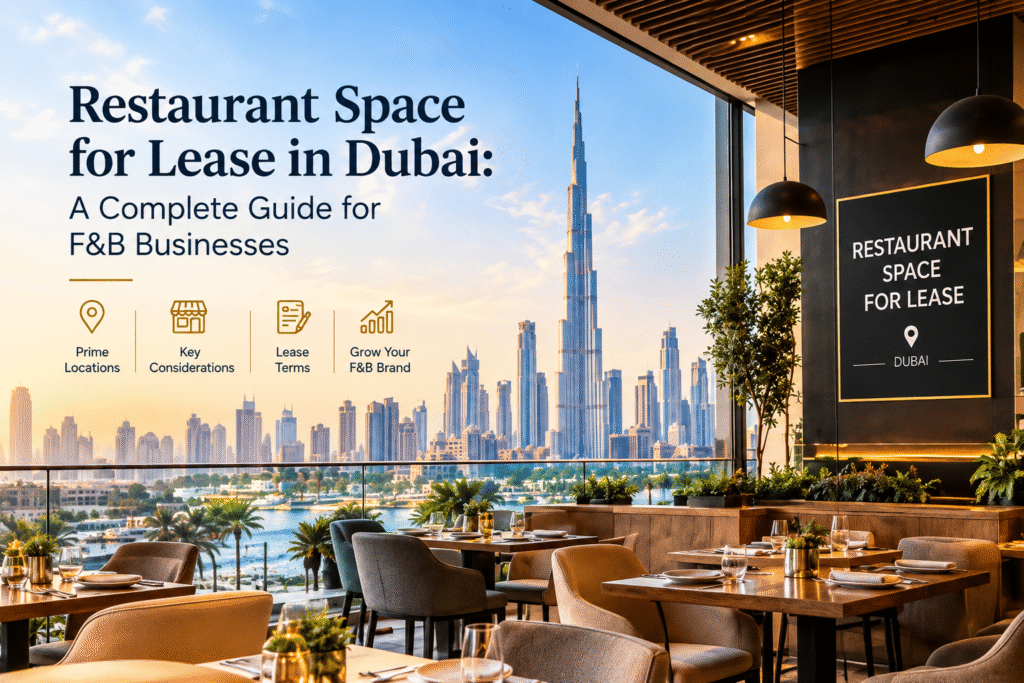
Finding the right restaurant space for lease in Dubai is one of the most important decisions for any F&B business entering or expanding in the UAE. The right property can support customer footfall, brand visibility, delivery operations, and long-term growth, while the wrong location can increase costs without delivering the expected returns. Dubai offers opportunities across high-street retail, shopping destinations, mixed-use developments, business districts, residential communities, and emerging F&B hubs. However, selecting a property requires more than comparing rental prices. Businesses need to evaluate location, customer demographics, accessibility, infrastructure, lease terms, and the property’s suitability for their restaurant concept. What Should You Consider When Leasing a Restaurant Space in Dubai? Before committing to a commercial property, F&B businesses should assess the following factors: 1. Location and Target Customers The best location depends on your restaurant concept and target audience. A fine-dining restaurant may benefit from an affluent catchment and destination appeal, while a café or QSR may prioritise high footfall, visibility, parking, and delivery accessibility. Consider: Customer demographics and spending behaviour Pedestrian and vehicle traffic Nearby offices, residences, hotels, and attractions Parking and public transport access Delivery coverage Competitor presence Future developments around the area A location should be selected based on its ability to support your business model, not simply because it is in a popular part of Dubai. 2. Size, Layout and F&B Infrastructure The space should accommodate your seating capacity, kitchen, storage, staff areas, customer facilities, and operational requirements. If you are considering a previously fitted restaurant, inspect the existing infrastructure carefully. Kitchen equipment, exhaust and ventilation systems, drainage, electrical capacity, grease traps, gas arrangements, and other technical provisions can significantly affect your fit-out investment. 3. Accessibility and Visibility For restaurants that depend on walk-in customers, visibility and easy access are essential. Check the property’s frontage, entrance, signage opportunities, parking, pedestrian access, and visibility from surrounding roads. For delivery-focused concepts, assess whether delivery riders can easily access the premises and whether the location provides efficient coverage of the intended delivery catchment. How Much Does Restaurant Space Cost to Lease in Dubai? There is no single rental price for restaurant properties in Dubai. Costs vary significantly depending on the location, property size, building, frontage, existing fit-out, customer catchment, and commercial demand. Instead of choosing a property solely because it has lower rent, businesses should assess the total occupancy cost against expected revenue potential. Consider: Annual rent Security deposit Service charges Fit-out costs Utilities and maintenance Rent-free or fit-out periods Annual rent increases Other landlord or development charges Dubai Land Department’s Rental Index can provide useful rental information for property assessments, but F&B businesses should also consider the specific commercial characteristics and operational suitability of each property. What Should You Check Before Signing the Lease? The lease agreement can have a significant impact on the financial performance of an F&B outlet. Before signing, review: Lease duration and renewal conditions Rent payment structure Rental escalation clauses Security deposit Permitted commercial activity Fit-out and alteration permissions Maintenance responsibilities Service charges Signage rights Exit and termination clauses Assignment or subleasing conditions Businesses should also ensure that the proposed restaurant activity is permitted at the property and that the relevant licensing and approvals can be obtained. Common Mistakes When Choosing a Restaurant Property F&B businesses can face unnecessary costs when they make property decisions without considering operational and commercial factors. Choosing based only on rent: A low-rent property may have weak customer potential or poor accessibility. Ignoring infrastructure: Inadequate ventilation, drainage, power capacity, or kitchen provisions can increase fit-out costs. Overlooking the target audience: High footfall does not automatically mean the right customers for your concept. Not reviewing lease conditions: Escalation clauses, maintenance obligations, and exit terms can affect long-term profitability. Failing to consider future expansion: Brands planning multiple outlets should consider whether the first location fits their wider UAE growth strategy. How Jaygee Sun Hospitality Helps F&B Businesses Find the Right Space Finding a suitable restaurant property in Dubai becomes easier when real estate decisions are evaluated alongside F&B strategy. Jaygee Sun Hospitality Management LLC supports restaurant, café, QSR, bar, hotel, and retail brands entering and expanding across the UAE. Its services include F&B real estate consulting, commercial space leasing and location scouting, legal and lease agreement support, business setup, and expansion assistance. The team can help businesses assess potential locations based on their concept, target customers, space requirements, budget, operational needs, and expansion plans rather than simply presenting available properties. FAQs What is the best location for a restaurant in Dubai? The best location depends on the restaurant concept, target audience, budget, and operating model. Businesses should evaluate customer catchment, footfall, accessibility, parking, visibility, competition, and delivery potential before choosing an area. What should I check before leasing a restaurant in Dubai? Check the property’s permitted activity, size, layout, F&B infrastructure, accessibility, parking, visibility, fit-out requirements, total occupancy costs, and lease conditions. It is also important to determine whether the necessary approvals can be obtained for the intended business activity. Is a fitted restaurant space better than an empty commercial unit? A fitted space can potentially reduce fit-out time and costs, but its existing infrastructure must be assessed against your concept and operational requirements. A property that requires fewer modifications may be more suitable, but this should be evaluated on a case-by-case basis. Can an F&B consultant help find restaurant space in Dubai? Yes. An F&B-focused real estate consultant can help with location scouting, commercial property evaluation, lease considerations, and aligning the property with the restaurant’s business and expansion strategy. How can I find the right restaurant space for lease in Dubai? Start by defining your concept, target customers, preferred locations, space requirements, and budget. Then evaluate available properties based on commercial potential, accessibility, infrastructure, lease terms, and long-term suitability. Working with an F&B real estate consultant can make the process more structured and efficient.
How to Start a Restaurant Business in Dubai: Step-by-Step Guide
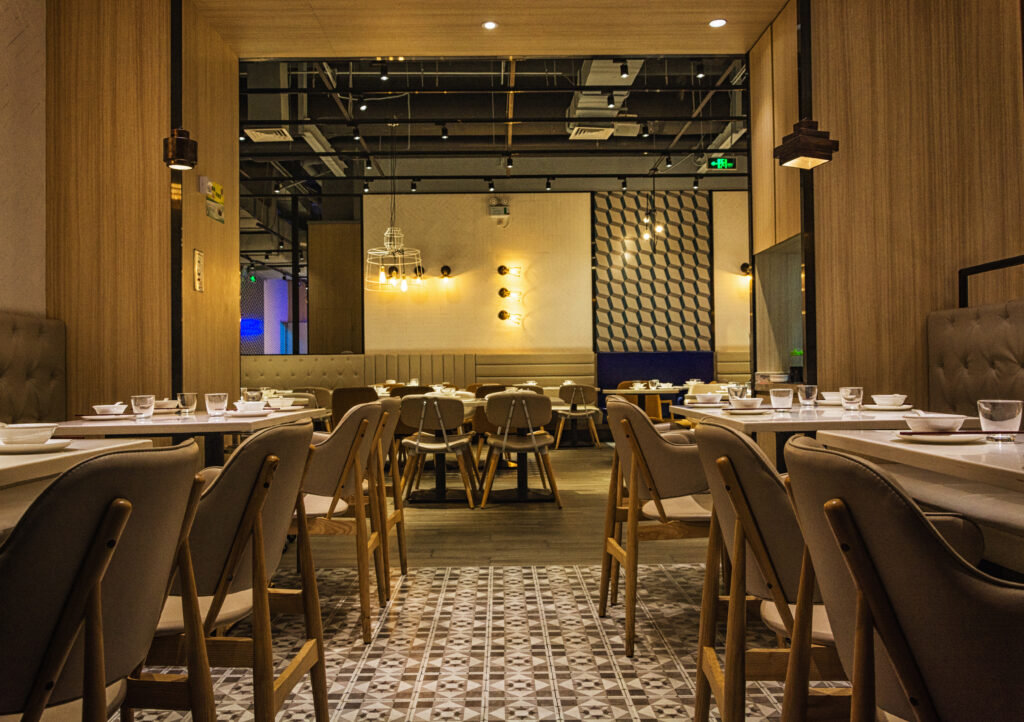
Dubai is a bustling city that attracts business owners from across the globe. Are you somebody who is thinking of opening a restaurant in Dubai? Are you wondering where to start? After all, Dubai is a place that has a competitive F&B market across cafés, QSRs, casual dining and fine dining. Some people seem to believe that when you get a license, it is enough. Well, that is just the beginning if you dig deep and try to understand the entire process. There is so much left to do still, including planning the concept, location, getting approvals, sorting out the staffing, and launching it in a way that it stands out. In all of this, choosing the perfect commercial property adds to your ‘to-do list’. It is one decision that greatly influences the setup costs and the profitability you can expect. Step-by-Step Guide to Starting a Restaurant in Dubai Step 1: Define Your Restaurant Concept and Business Model Decide what you are building before selecting a property: Format: café, QSR, casual dining, fine dining, or cloud kitchen Cuisine and target audience Seating capacity Dine-in, takeaway, delivery, or a combination Pricing and positioning Your concept determines space, kitchen, and infrastructure needs. Different formats require different properties. Step 2: Create a Restaurant Business Plan and Budget Plan for: Rent and security deposit Fit-out, interiors, and kitchen equipment Licences and approvals Staffing and training Initial inventory Marketing and technology A practical budget helps you compare properties and control premises spending. Step 3: Choose Mainland or Free Zone Dubai provides mainland and free-zone setup routes. Mainland companies are registered through Dubai authorities, while free zones follow their own frameworks. The choice depends on activity, ownership, location, and operating model. Invest in Dubai provides setup, licensing, and mainland/free-zone information. Step 4: Choose the Right Restaurant Location Here are some factors that you must consider: Target customer Footfall and visibility Accessibility and parking Nearby businesses and competition Residential versus commercial areas High-street versus mall Rent and occupancy F&B infrastructure Choosing a restaurant property in Dubai is not simply about finding space within budget. An F&B real estate consultant Dubai can assess terms, location, and operational requirements before committing. Step 5: Find and Lease a Suitable Commercial Space Review shortlisted properties for: Rent, deposit and lease tenure Lease escalation Fit-out and rent-free periods, where negotiated Maintenance charges Permitted activity and usage Kitchen infrastructure Power, drainage and exhaust Lease documentation Jaygee Hospitality evaluates location, visibility, accessibility, and infrastructure while supporting negotiations and site handover. Step 6: Obtain the Required Business and Restaurant Licences Requirements vary by activity and concept. The process may involve: Trade name and business registration Appropriate trade or business licence Restaurant activity approvals Dubai Municipality food-related approvals Additional approvals for concepts Avoid a universal checklist. Confirm requirements for the proposed activity and location. Dubai Municipality provides services for food activity permits and food-establishment layout assessments. Step 7: Get the Restaurant Layout and Food Safety Approvals Plan kitchen and service areas around food safety and efficient operations. Consider: Food preparation and storage Hygiene and cleaning areas Waste management Ventilation and exhaust Equipment placement Safe food movement Dubai Municipality maintains specific food-establishment requirements and services for layout assessment and food-related approvals. Step 8: Complete the Fit-Out and Kitchen Setup Once approvals and lease conditions are aligned, complete civil, plumbing, electrical, HVAC, lighting, furniture, signage, and kitchen installation according to approved layouts. Step 9: Hire Staff and Set Up Restaurant Operations Hire management, kitchen, and front-of-house staff. Dubai Municipality’s food-safety framework emphasises trained personnel and food-safety procedures. Step 10: Complete Final Approvals and Prepare for Launch Complete final approvals, confirm the menu, suppliers, and training, then conduct trial operations. Set up Google Business Profile and delivery platforms, and consider a soft launch. Common Mistakes to Avoid When Opening a Restaurant in Dubai Here are some common mistakes that you will do well to sidestep. Choosing property based only on rent Signing before checking F&B suitability Underestimating fit-out costs Ignoring parking and accessibility Not checking permitted activities Underestimating working capital Ignoring the target customer Expanding before the first outlet is stable Conclusion Starting a restaurant in Dubai requires planning across concept, budget, setup, location, leasing, licensing, food safety, and launch. Gaps in planning can create unnecessary costs or delays. An experienced F&B real estate consultant in UAE can help brands evaluate properties and make informed leasing decisions. Moreover, when you choose Jaygee Hospitality, you get that very expertise to help you make informed decisions throughout the entire process. FAQs 1. Should I choose a mainland or free-zone setup? The right option depends on your business activity, operating model, ownership structure and intended location. 2. What should I check before leasing a restaurant property? Check permitted use, rent, deposits, fit-out terms, infrastructure, accessibility and ongoing occupancy costs. 3. Can an F&B real estate consultant help with restaurant expansion? Yes, a specialised consultant can assist with property sourcing, evaluation, leasing, and expansion strategy.
How Much Does It Cost to Open a Restaurant in India in 2026?
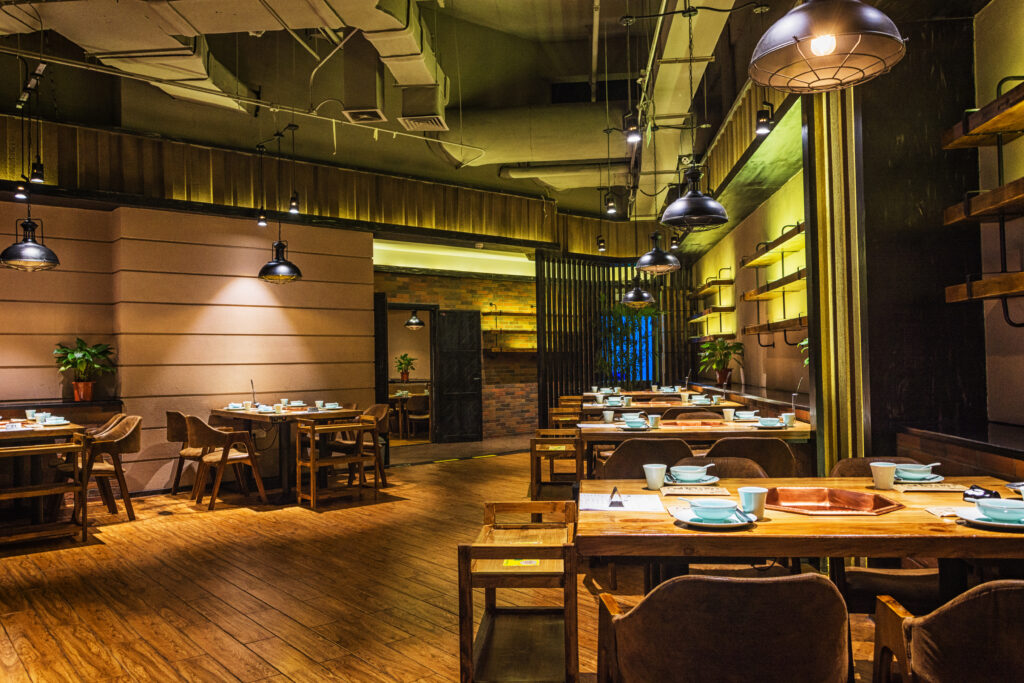
Have you recently asked yourself how much it costs to open a restaurant in India in 2026? After all, so many folks have that dream of one day opening their own restaurant. However, the answer to this question cannot be given with a single fixed number. How much money you will have to invest in opening a restaurant will vary, depending on various factors. These will usually include concept, size, kitchen requirements, city, location, and the format of the restaurant. Whether or not you are choosing the perfect commercial space also works as a factor that can influence the overall cost. In fact, current industry standards show that the cost to open a restaurant in India in 2026 varies heavily. How Much Does It Cost to Open a Restaurant in India in 2026? Restaurant Format Indicative Investment Cloud Kitchen ₹8–15 lakh+ Small QSR ₹25–50 lakh+ Café ₹40–80 lakh+ Premium Café ₹60 lakh–₹1.2 crore+ Casual Dining ₹75 lakh–₹1.5 crore+ Premium/Fine Dining ₹1.5–3 crore+ It must be noted that the cost mentioned in the table above is a broad range, and you should not take it as a fixed quotation. Major Costs Involved in Opening a Restaurant 1. Commercial Property Rent and Security Deposit For most restaurants, the property is one of the most important financial decisions. The cost is not limited to monthly rent. You may also need to account for: Security deposit Advance rent Brokerage Lease and legal costs Common-area or maintenance charges Fit-out period and rent-free period Location premium High-street and premium commercial locations can command significantly higher rents than secondary locations. However, paying more for a property can make sense when it delivers stronger visibility, accessibility and customer potential. This is where an F&B leasing consultant can add value by helping evaluate not just the asking rent, but the overall commercial terms and suitability of the property. 2. Interior Design and Fit-Out Your interiors can account for a substantial portion of the initial investment, particularly for cafés, casual dining and premium concepts. Typical expenses include: Civil work and flooring Electrical and plumbing Lighting HVAC Furniture Décor Signage 3. Kitchen Equipment and Infrastructure Kitchen requirements depend heavily on your menu and format. Costs may include: Cooking equipment Refrigeration Exhaust and ventilation systems Storage Preparation equipment Dishwashing systems Smallwares A larger or more complex menu generally requires a more extensive kitchen setup. Planning equipment around the actual menu can prevent unnecessary capital expenditure. 4. Licences and Registrations Restaurants may require several registrations and approvals, depending on their location and operations. These can include: FSSAI registration or licence GST registration Local trade and health licences Fire-related approvals Shops and Establishments requirements Music licences, where applicable Liquor licence, if applicable There is no single nationwide licensing cost. Fees, permissions and requirements vary by state, municipality and business activity, particularly when liquor is involved. 5. Staff, Inventory & Technology Before opening, founders also need to budget for recruitment and training, initial food inventory, packaging, POS systems, technology, branding and launch marketing. 6. Working Capital Working capital is one of the most commonly underestimated expenses for restaurants. Opening day is not the finish line; the business needs enough cash to operate while sales gradually stabilise. Your reserve may need to cover: Rent Salaries Utilities Inventory Marketing Maintenance Current restaurant cost guides specifically highlight working capital as a major cost that founders often overlook. How Location Impacts Restaurant Startup Cost? Two restaurants with the same concept, menu, and size can have very different startup costs simply because they operate from different locations. Consider factors such as: High-street vs mall: Rental structures, visibility, and customer behaviour can differ considerably. Prime vs secondary location: Prime areas may cost more but can offer stronger visibility and footfall. Tier 1 vs Tier 2/3 city: Rent, labour and fit-out costs can vary significantly. Footfall and accessibility: A cheaper property may not deliver enough customers. Parking and visibility: These can directly influence customer convenience. Rent-to-revenue viability: The property must make commercial sense against projected sales. An F&B real estate consultant India businesses can rely on can help assess location potential, property suitability, infrastructure, and lease economics before a commitment is made. For example, we at Jaygee Hospitality evaluate commercial opportunities based on factors such as location, visibility, accessibility, infrastructure, and business potential, while also supporting lease negotiations and site handover. How to Manage Restaurant Startup Costs? Choose the right restaurant format for your budget and target market. Avoid overspending on interiors that do not contribute to customer experience or operations. Negotiate lease terms, including deposits, escalation clauses and fit-out periods. Choose a property requiring less structural modification wherever possible. Optimise kitchen size and equipment around your actual menu. Start with a focused menu instead of investing in unnecessary equipment. Maintain adequate working capital for the initial operating period. Evaluate total occupancy cost, not just the headline rent. Conclusion If you are still reading this piece, it must be safe to assume that you are considering making this investment. And hence, you are out in the market to find out all you can about the cost to open a restaurant in India in 2026. What we can tell you for sure is that your investment can range from a few lakhs to even a couple of crores and beyond. However, the exact amount you will have to spend will vary, as we discussed in-depth throughout this blog. As you proceed with planning and execution, you will face multiple decisions, but your property and leasing decision will be key. It will greatly influence the cost and investment. Furthermore, if you want help with leasing, location selection, or any form of expansion support in the industry, reach out to us at Jaygee Hospitality for specialised F&B real estate and leasing expertise. FAQs 1. What is the minimum investment required to open a restaurant in India in 2026? A small cloud kitchen may start at around ₹8–15 lakh, while a conventional restaurant typically requires a higher investment. 2. What is the biggest cost when
Restaurant Expansion Strategy in India: How Top Brands Scale to Multiple Locations
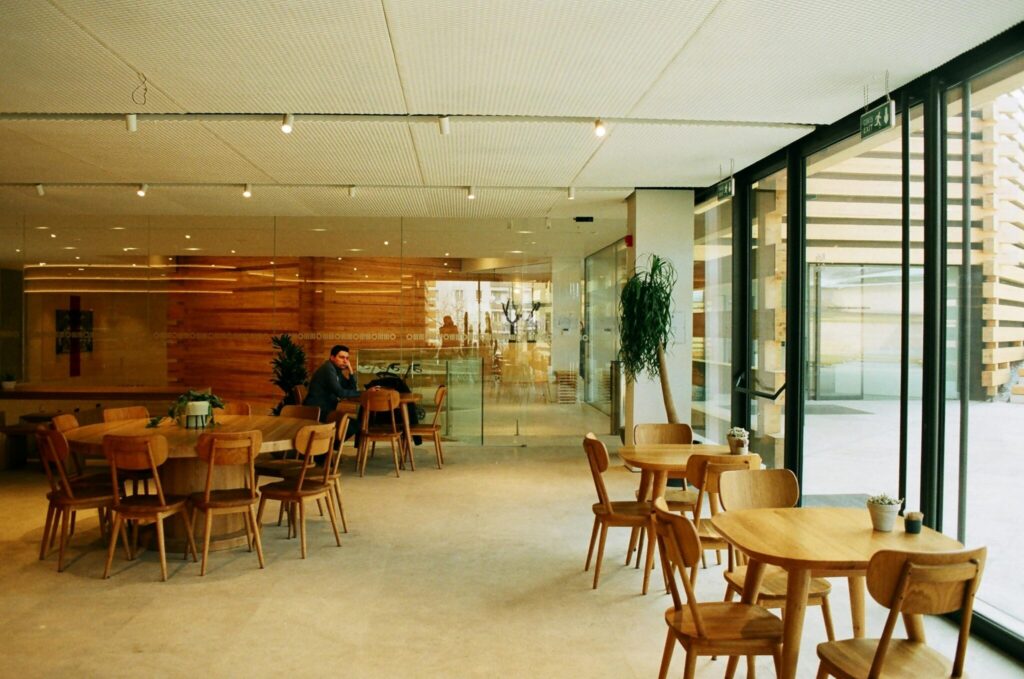
Growing a restaurant business from one outlet to multiple locations is a major milestone for any hospitality brand. It reflects customer trust, operational strength, and long-term business vision. But successful expansion is not simply about opening more outlets. It is about building a scalable business that maintains quality, customer experience, and profitability across every location. India’s restaurant industry is expanding rapidly across metro cities like Delhi, Mumbai, Bengaluru, Hyderabad, Pune, Chennai, and Kolkata. From cafés and QSR brands to premium dining spaces and cloud kitchens, hospitality businesses are actively exploring expansion opportunities in high-growth urban markets. This is why restaurant owners frequently search for topics like: How to expand restaurant to multiple locations in India Restaurant expansion plan for cafes and QSR brands How brands scale restaurants successfully India Cost of opening second restaurant in India A strong expansion strategy combines location intelligence, operational systems, customer understanding, and financial sustainability. Hospitality consulting firms like Jaygee Hospitality help restaurant brands create structured expansion strategies designed for scalable growth across India’s evolving food and beverage market. Key Takeaways Restaurant expansion requires operational consistency, strategic location planning, and financial clarity. Metro cities like Delhi, Mumbai, Bengaluru, Hyderabad, Pune, and Chennai continue driving restaurant growth in India. Strong commercial locations improve visibility, customer retention, and delivery performance. Cafés and QSR brands often scale efficiently through standardized systems and delivery-friendly operations. Searches like restaurant for lease in Delhi, restaurant space for rent near me, and bar and restaurant for lease in Bangalore should involve deeper commercial evaluation. Professional restaurant leasing services India help brands identify commercially sustainable growth opportunities. Jaygee Hospitality supports restaurant businesses with hospitality consulting, expansion planning, and strategic leasing guidance. “Restaurant expansion becomes sustainable when customer experience, operations, and location strategy grow together.” “The right location can strengthen visibility, repeat customer traffic, and long-term restaurant profitability.” “Successful restaurant brands scale through consistency, planning, and understanding customer behavior across different cities.” Why Restaurant Expansion Is Growing Across India India’s urban dining culture continues growing because of changing lifestyles, food delivery adoption, rising disposable income, and experience-driven consumer behavior. Several metro cities are leading hospitality growth in India: Metro City Restaurant Growth Drivers Delhi NCR Strong dining culture and high street markets Mumbai Premium dining and nightlife demand Bengaluru Café culture and young working population Hyderabad Fast-growing QSR and casual dining market Pune Student and IT-driven food demand Chennai Expanding premium café and family dining culture Kolkata Growing café and boutique restaurant ecosystem These cities continue attracting hospitality brands because of their dense customer base, commercial activity, and growing food service demand. However, expansion without planning can create operational stress, inconsistent customer experience, and financial pressure. This is why successful restaurant brands focus on structured and sustainable growth. How Brands Scale Restaurants Successfully in India Top-performing restaurant brands usually focus on building repeatable systems and choosing expansion markets strategically. 1. Standardized Operations Strong SOPs, kitchen systems, staff training, and vendor management help restaurants maintain consistency across locations. 2. Strategic Location Planning Location directly affects: Customer visibility Walk-in traffic Delivery efficiency Repeat visits Brand positioning This connects closely with search trends like: How location affects restaurant revenue in India Does location matter in restaurant business India The right location often improves profitability naturally through stronger customer accessibility and market visibility. 3. Financial Readiness Before opening a second or third outlet, brands should ideally achieve stable operations and healthy revenue performance at the first location. 4. Consistent Brand Experience Customers expect the same food quality, service standards, and brand identity across every outlet. 5. Scalable Supply Chain Management As restaurants expand across metro cities, sourcing consistency and operational coordination become more important. Key Factors Behind Successful Restaurant Expansion Expansion Factor Business Impact Strategic location selection Better customer reach Standardized operations Easier scalability Delivery-friendly markets Stronger online revenue Financial planning Lower expansion risk Brand consistency Improved customer loyalty Sustainable leasing strategy Better profitability Smart Restaurant Expansion Strategy Successful First Outlet ↓ Build Standardized Systems ↓ Research Expansion Markets ↓ Select Strategic Commercial Locations ↓ Strengthen Operational Scalability ↓ Expand Across Multiple Locations How to Expand Restaurant to Multiple Locations in India Restaurant expansion works best when approached step by step instead of rapid scaling without systems in place. Stabilize the First Outlet Before expansion, restaurants should ideally achieve: Consistent monthly revenue Stable operational systems Strong customer retention Healthy delivery performance Sustainable profit margins Identify the Right Expansion Markets Different metro cities support different restaurant concepts. For example: Bengaluru and Pune perform strongly for cafés and delivery-first concepts. Delhi NCR supports premium dining, cafés, and high street restaurant formats. Mumbai attracts luxury dining and nightlife-driven concepts. Hyderabad continues growing in QSR and casual dining demand. Focus on Strategic Location Selection Location remains one of the strongest drivers behind restaurant profitability and scalability. This involves evaluating: Customer demographics Footfall quality Delivery radius Parking availability Competition density Rental sustainability This is why searches like: restaurant for lease in Delhi restaurant space for rent near me restaurant on lease near me bar and restaurant for lease in Bangalore should involve proper commercial evaluation instead of selecting spaces based only on rental pricing. Best High Street Locations for Restaurants in Delhi Delhi remains one of India’s strongest restaurant markets because of its active dining ecosystem and diverse customer segments. Some of the best high street locations for restaurants in Delhi include: Connaught Place Popular for premium dining, tourism, and corporate footfall. Khan Market Known for affluent customers and premium café culture. Greater Kailash (GK) Strong market for boutique cafés and upscale casual dining. Rajouri Garden Popular among family dining and youth-focused restaurant brands. Hudson Lane A thriving student-driven café and QSR market. Saket Commercial Zones Strong mix of retail, entertainment, and dining traffic. The ideal expansion market depends heavily on restaurant format, target audience, and operational goals. Jaygee Hospitality helps restaurant brands evaluate commercial viability, customer potential, and long-term leasing sustainability before finalizing expansion spaces. Planning restaurant expansion across India’s metro cities? Jaygee Hospitality helps café brands, QSR chains, and hospitality
Why Location Can Make or Break Your Restaurant Revenue in India (2026 Guide)
A restaurant can serve exceptional food, create beautiful interiors, and still struggle to achieve consistent revenue if the location is wrong. In India’s fast-growing food and beverage industry, location directly influences customer visibility, footfall, delivery performance, pricing power, and long-term profitability. From cafés and QSR chains to premium dining spaces and cloud kitchens, choosing the right commercial location has become one of the most important business decisions for restaurant owners. This is why hospitality brands and investors frequently search questions like: How location affects restaurant revenue in India How to select restaurant location for maximum profit Does location matter in restaurant business India The answer is clear, location shapes customer behavior more than most restaurant owners initially expect. Brands working with hospitality experts like Jaygee Hospitality often gain stronger clarity around commercial hotspots, audience mapping, leasing strategy, and operational feasibility before investing in restaurant spaces. Key Takeaways Restaurant location strongly impacts customer footfall, delivery efficiency, and profitability. High street visibility often improves walk-ins, repeat visits, and brand recall. Choosing the right commercial area depends on audience type, accessibility, and competition. Rental cost should be balanced with long-term revenue potential. Searches like restaurants for rent near me and restaurants for lease near me should involve deeper commercial evaluation. Professional restaurant leasing services India help restaurant brands reduce operational and expansion risks. Jaygee Hospitality supports restaurant businesses with strategic leasing guidance and hospitality growth planning. “A restaurant location should not only attract people. It should attract the right customers consistently.” “Visibility, accessibility, and audience alignment often influence restaurant revenue more than décor alone.” “Successful restaurant expansion starts with understanding customer movement and commercial potential.” How Location Affects Restaurant Revenue in India Restaurant revenue is closely connected to customer convenience and visibility. People usually choose dining spaces that are easy to notice, easy to access, and located in commercially active areas. A strong location naturally improves discovery and repeat visits without depending entirely on advertising. Key Ways Location Influences Revenue 1. Footfall and Walk-In Customers Restaurants located in busy commercial areas generally receive better organic visibility. Customers passing through high streets, office hubs, or retail zones often make spontaneous dining decisions. 2. Accessibility and Convenience Parking availability, metro connectivity, road access, and surrounding infrastructure strongly influence customer preference in cities like Delhi, Mumbai, Bengaluru, and Hyderabad. 3. Delivery Performance Online food delivery has become a major revenue driver across India. Restaurant location affects delivery time, service radius, and customer satisfaction. 4. Brand Perception Premium restaurant locations often help brands create stronger positioning and customer trust. 5. Repeat Customer Potential Restaurants located near residential zones, offices, colleges, or retail markets usually benefit from recurring customer traffic. Location Factors That Affect Restaurant Revenue Location Factor Revenue Impact High street visibility Better walk-in traffic Strong residential catchment Higher repeat customers Nearby offices and colleges Improved weekday sales Metro and parking access Better customer convenience Competitive restaurant zone Higher discovery potential Poor accessibility Reduced customer visits High rent with weak traffic Lower profitability Delivery-friendly location Stronger online orders How Restaurant Location Impacts Business Growth Restaurant Location Selection ↓ Customer Visibility ↓ Footfall & Accessibility ↓ Better Customer Experience ↓ Higher Repeat Visits ↓ Stronger Revenue Growth Does Location Matter in Restaurant Business India? Yes, significantly. Even well-designed restaurant concepts can struggle if the surrounding customer ecosystem does not support the business model. For example: A premium fine-dining outlet may perform better in affluent high streets. A student-focused café benefits from university zones. Cloud kitchens require strong delivery density instead of expensive storefront visibility. Family restaurants need parking access and comfortable surroundings. Understanding local demographics and customer behavior is essential while choosing restaurant spaces. This is where strategic hospitality consulting becomes valuable. Jaygee Hospitality helps restaurant brands evaluate commercial viability, customer potential, competition density, and leasing sustainability before finalizing locations. Best High Street Locations for Restaurants in Delhi Delhi remains one of India’s strongest restaurant markets because of its diverse customer base and active dining culture. When discussing the best high street locations for restaurants in Delhi, certain commercial zones consistently attract hospitality growth. Connaught Place Strong mix of corporate traffic, tourists, shoppers, and dining customers. Khan Market Premium audience with high spending capacity and strong café culture. Rajouri Garden Popular for casual dining, lounges, and family-focused restaurants. Greater Kailash (GK) Well-known for premium cafés, restaurants, and boutique dining concepts. Hudson Lane A thriving student-driven food market with high café and quick-service demand. Cyber Hub Corridors Popular among working professionals and premium dining audiences. The ideal location depends heavily on the restaurant concept, pricing strategy, customer demographic, and operational goals. Looking for profitable restaurant locations in India? Jaygee Hospitality helps restaurant brands identify high-potential commercial spaces through strategic location analysis, hospitality consulting, and leasing support tailored for long-term business growth. How to Select Restaurant Location for Maximum Profit Choosing a restaurant location requires much more than checking rental prices. A profitable location balances visibility, operational efficiency, customer accessibility, and long-term commercial sustainability. Important Factors to Evaluate Understand Your Customer Segment Different restaurant formats attract different audiences. Understanding spending behavior and dining preferences is critical. Study Local Footfall Patterns Evaluate whether the area attracts relevant customer traffic during peak operating hours. Check Competitive Presence Healthy competition often indicates strong dining demand, but oversaturation can affect profitability. Evaluate Accessibility Parking availability, public transport connectivity, and road visibility influence customer convenience. Analyze Delivery Potential For delivery-focused businesses, location should support fast delivery across dense residential or office zones. Review Rental Sustainability Higher rentals should align with realistic revenue projections and operational margins. Searching for Restaurant Spaces in India Restaurant businesses frequently search online for: restaurants for rent near me restaurant rental space near me restaurants for lease near me However, choosing restaurant property based only on listing availability can create long-term operational challenges. Commercial restaurant leasing requires evaluating: Customer density Area demographics Competitive restaurant landscape Licensing feasibility Parking infrastructure Brand suitability Delivery logistics Professional restaurant leasing services India help restaurant businesses make commercially informed decisions instead of emotionally driven investments.
Best Place to Open a Restaurant in Delhi | Restaurant for Lease in Delhi
Opening a restaurant in Delhi is a high-opportunity move, but success depends heavily on where you open. The right location drives visibility, repeat customers, and delivery efficiency. If you are currently searching for restaurant rental space near me, restaurant space for rent near me, or restaurant for lease in Delhi, this guide will help you make a decision that delivers long-term returns. Through this blog, you will understand how to evaluate locations, compare high-potential areas, and choose a space that aligns with your concept, budget, and target audience. Jaygee Hospitality works with restaurant founders, café owners, and F&B brands to identify high-footfall, revenue-focused spaces across Delhi’s most promising micro-markets, helping you move from property search to a fully operational restaurant with clarity and confidence. Why Location Decides Your Restaurant’s Growth The best place to open restaurant in Delhi goes beyond choosing a premium area. It is about: Matching your concept with the right audience Ensuring consistent footfall throughout the week Keeping rental costs aligned with revenue potential Creating strong visibility without heavy ad spend Choosing the best restaurant location in Delhi can significantly reduce your dependency on paid marketing. Top Micro-Markets in Delhi You Should Consider Connaught Place (CP) Located in central Delhi, Connaught Place remains one of the strongest commercial hubs. High office crowd + tourists Ideal for cafes, lounges, and premium dining Strong brand visibility It is often considered the best market in Delhi for restaurant due to its unmatched footfall. Hauz Khas Village & Deer Park Zone Hauz Khas Village is known for its café culture and nightlife. Perfect if you’re exploring where to open cafe in Delhi Youth-driven audience Great for themed cafés and experiential dining Greater Kailash (GK 1 & GK 2) Greater Kailash offers a premium residential + retail mix. High spending capacity Strong dine-in culture Ideal for boutique restaurants and dessert cafés A good location for restaurant in Delhi if you want consistent, quality footfall. Rajouri Garden & Punjabi Bagh Rajouri Garden and nearby areas are booming F&B zones. High-density residential population Strong demand for family dining Better rental value compared to South Delhi This is a practical, best area for a food business in Delhi for scaling operations. Hudson Lane (North Campus) Hudson Lane is a student hotspot. Budget-friendly concepts perform well High repeat customer base Great for QSRs and café chains Aerocity & Dwarka Expressway Belt Aerocity is a premium hospitality hub. High-end audience Airport-driven traffic Ideal for fine dining and lounge concepts Types of Spaces You Will Find When exploring commercial space for a restaurant Delhi, you will come across the following: Space Type Best For High Street Retail Walk-in focused brands Mall Spaces High footfall + brand recall Standalone Units Full brand control Cloud Kitchen Setups Delivery-first businesses If you’re browsing restaurant space for rent near me, always check kitchen infrastructure, ventilation, and licensing feasibility before finalizing. Also, while exploring restaurant space for rent in Delhi, ensure your rent stays within a sustainable percentage of your projected revenue. Decision Flow to Finalize the Right Location A structured approach improves the success rate: Concept → Audience → Budget → Area Selection → Property Shortlisting → Site Visits → Negotiation → Legal Checks → Final Lease This process helps avoid rushed decisions while searching for a restaurant for lease in Delhi. Common Mistakes That Hurt ROI Finalizing spaces only based on low rent Ignoring visibility and access Not studying competitor density Underestimating delivery demand Many people searching for restaurant rental space near me make quick decisions and struggle later with low walk-ins. How Jaygee Hospitality Supports Your Search Jaygee Hospitality helps restaurant owners: Identify high-performing locations aligned with the concept Compare multiple restaurant space for rent near me options Evaluate long-term ROI before lease commitment Navigate legal, zoning, and licensing requirements If you are actively exploring a restaurant for lease in Delhi or are unsure about the best restaurant location in Delhi, connect with Jaygee Hospitality for curated, high-footfall property options that match your business goals. Conclusion The best place to open a restaurant in Delhi depends on your concept, audience, and financial planning. Whether you are searching for restaurant rental space near me, restaurant space for rent near me, or restaurant space for rent in Delhi, your decision should focus on long-term profitability rather than simply choosing what is available. A well-chosen location supports steady walk-ins, stronger brand recall, and smoother delivery operations. It also allows you to scale efficiently without constantly relying on heavy promotional spending. Looking for the best area for a food business in Delhi or a verified commercial space for restaurant Delhi? Connect with Jaygee Hospitality today to explore premium listings, gain strategic location insights, and secure the right restaurant property in Delhi with end-to-end support designed for scalable growth. What is the best place to open a restaurant in Delhi? The best place to open a restaurant in Delhi depends on your target audience and concept. Areas like Connaught Place, South Delhi, and Rajouri Garden offer strong footfall and diverse customer segments, making them some of the most preferred locations. How can I find restaurant space for rent in Delhi? To find restaurant space for rent in Delhi, you can explore high-street markets, commercial hubs, and online property platforms. It is important to compare multiple options based on footfall, rent, and accessibility before finalizing. What should I check before choosing a restaurant rental space near me? When evaluating restaurant rental space near me, focus on visibility, nearby competition, parking availability, kitchen infrastructure, and legal approvals. These factors directly impact daily operations and long-term profitability. Is it better to lease or rent a restaurant space in Delhi? Choosing between lease and rent depends on your business plan. A restaurant for lease in Delhi is suitable for long-term stability, while rental options offer flexibility, especially for new or experimental concepts. Which is the best area for a food business in Delhi? The best area for a food business in Delhi includes locations with high footfall and