
How to Choose the Right Kiosk Location for a QSR or Cafe
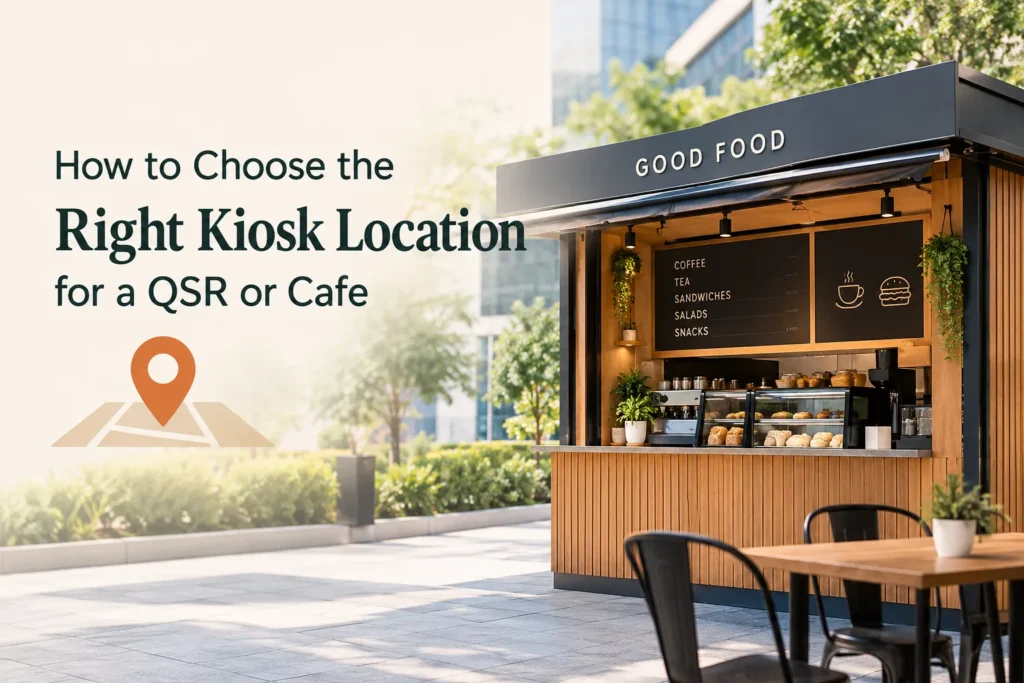
Picking the right spot for a kiosk is honestly one of the biggest decisions you’ll make when opening a QSR or coffee shop. You can have a great menu, fresh ingredients, and lightning-fast service, but none of that matters much if nobody’s walking by. Location drives foot traffic, and foot traffic drives sales. Get the location right, and everything else gets a lot easier. It is important for entrepreneurs to carefully consider many different aspects of the location before renting a kiosk, including foot traffic, costs to the audience and accessibility of the venue. A location that is suitable at the outset may turn out to be a bad choice in the long run. There are various steps that can be implemented to fulfil all the necessary aspects for business growth : 1. Understand and focus on the target audience A Cafe or any coffee shop can do well in business areas where working professionals live or commute while a QSR aimed at students usually performs on or near school campuses. You must pay attention to what customers actually want, how much they are willing to spend, what kind of food they choose and the times they buy it most. Office workers for instance tend to go for breakfast, coffee and lunch while shoppers usually grab snacks, desserts and drinks to cool off throughout the day. Choose a location based on customers’ behaviour. This will help you pick the kiosk spot rather than just depending on foot traffic. 2. Evaluate Footfall and Customer Movement Having a lot of customers in a location can help boost profits for businesses, but the quality of traffic equally impacts sales. To analyse the possibilities of prospective locations, the key periods must be examined, such as busy hours on weekdays and weekends. Moreover, it is necessary to analyse where customers are stopping while passing the potential kiosk and their situation in terms of time. The places of pedestrian movement should be observed carefully, which includes all entrances, escalators, waiting places, and other common gathering points. For instance, a business may benefit more from a kiosk that is placed close to a busy corridor compared to the one that is placed at the corner of the room. 3. Choose the Right Type of Commercial Location Various types of commercial environments appeal to different types of customers and have different leasing systems. Here are a few important examples of commercial locations: Shopping malls – these work well for coffee, snacks, simple desserts and impulse buys, especially in high-visibility spots like food courts, theatres and gate areas. Office buildings and business centres – these are great for coffee, breakfast, quick lunches and take-out, mainly targeting working professionals. Subway stations and transportation hubs – They provide the opportunity to sell quickly moving drinks and food, subject to convenient access to the place and service speed. High-street commercial zones – They can be great for local cafes, take-out counters, and QSR brands providing services to people living and working in the neighbourhood, as well as to shoppers and travellers. Educational and entertainment areas – These are great for drawing students, families, and visitors searching for budget fast-food cafes. Compare the expected client demand, rental cost, restrictions for the business, and suitability of each environment before making any decisions regarding your upcoming coffee shop. 4. Calculate Rental Costs and Overall Expenses Renting a kiosk at a price by no means ensures higher profitability. So calculate expenses on rent or operating costs and kiosk set-up before signing the lease. Your expenditure estimates ought to include rent, the first instalment, renovation costs, permits, utility expenses, staffing, packaging, amongst others. Estimates required sales to break even: for instance supposing that fixed costs each month are 150,000 rupees and contribution margin is 50% then to cover costs sales should come up to 300,000 rupees per month if you compute your contribution margin accurately. Benchmark this target, against sales suggesting footfall, conversion rates, average order value and operating hours. 5. Check Visibility, Accessibility, and Signage The place where a kiosk is located is very important so it needs to be in a spot that’s easy to reach when people are walking along their usual path. It makes sense to check how visible the kiosk is by seeing if there are any things blocking the way for people walking towards it. It is an idea to think about putting up lights on signs or using screens for showing menus or other kinds of ads. It is better to learn about all the rules and laws that apply to this before starting so that there are no surprises later. Being easy to get to is also a point so the design should make it simple for customers to get to the counter. The spot should also be easy for delivery people to come and get their orders. 6. Assess Utilities, Layout, and Operational Requirements Before renting a kiosk, take some time to check whether the place you are eyeing can actually handle your menu and your equipment. When you think about a kiosk remember that the space must fit the menu and the equipment you plan to use. You will also want to look at the basics such as electricity and water supply, drainage, ventilation and storage space. Certain machines, such as coffee makers, ovens and coolers need electrical setups and enough room to run the way they should. When you examine the equipment ensure it has the power and space it needs. Go through the layout carefully to make sure your team can prepare orders, handle payments and hand food to customers without delays. Do not let the small space stop you from keeping things clean, handling food safely and moving around easily. Check the rules about food safety and fire safety. Also look at building rules and guidelines framed by the local government. Make sure that what you plan to do and put in is allowed by the person who owns the place and the
How to Negotiate Commercial Lease Terms for a Restaurant in India
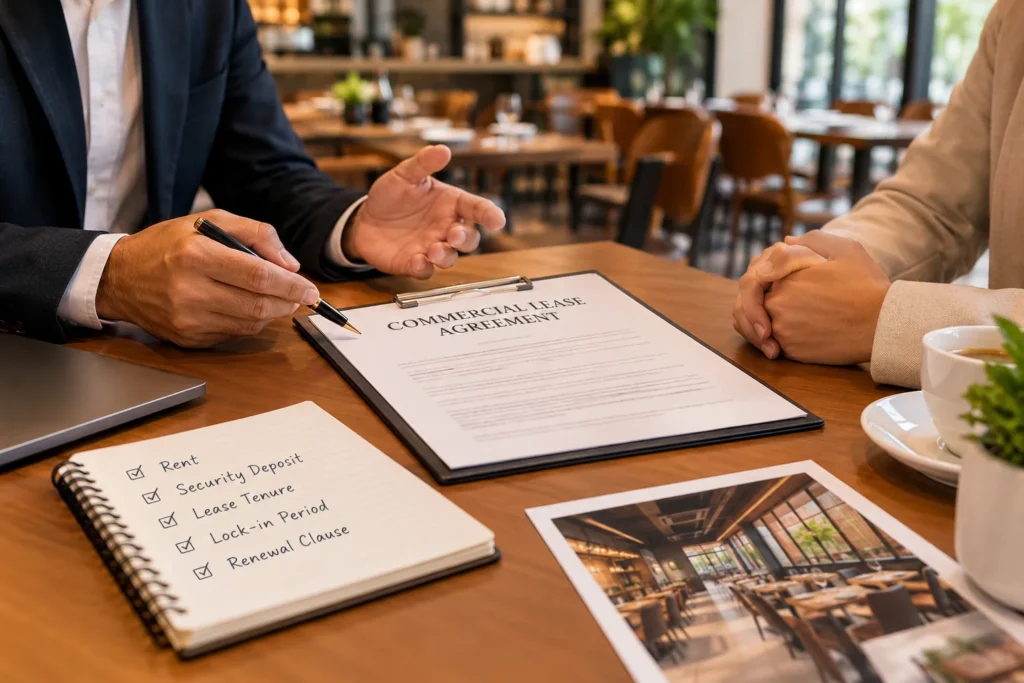
Opening a restaurant involves more than choosing the right menu, hiring staff, and creating an attractive ambience. Finding the right property and negotiating favourable lease terms are equally important for long-term success. A poorly negotiated agreement can increase operating costs, restrict business activities, and affect profitability even when the restaurant attracts customers. In India, restaurant owners must consider several factors before signing a lease, including rental costs, security deposits, lock-in periods, maintenance charges, and permissions for restaurant operations. Understanding these terms can help business owners make informed decisions and avoid unnecessary financial risks. Here is how to negotiate a commercial lease for a restaurant in India while protecting your investment and ensuring operational flexibility. 1. Research the Location Before Negotiating The location of a restaurant influences customer footfall, visibility, accessibility, and revenue potential. Before discussing the lease terms, evaluate whether the property suits your restaurant concept and target audience. Consider factors such as: Target customers: Check whether the surrounding population matches your intended customer base. Visibility and accessibility: Look for properties with convenient entry points, parking availability, and good visibility from the road. Competition: Study nearby restaurants to understand local demand, pricing, and market saturation. Infrastructure: Assess electricity supply, water availability, drainage, exhaust provisions, and space for kitchen operations. Compare rental rates across similar properties in the area. This information can help you negotiate with the landlord using market evidence rather than relying solely on the quoted rent. 2. Negotiate the Monthly Rent and Escalation Clause Rent is one of the largest recurring expenses for a restaurant. Even a small difference in the monthly rental amount can significantly affect annual operating costs. Before accepting the landlord’s offer, compare the rent with similar commercial properties and assess whether the projected revenue can comfortably support the expense. You can negotiate the following: Monthly rent: Use comparable properties and the property’s condition to support your proposed rental amount. Rent-free period: Request a rent-free fit-out period to install kitchen equipment, complete interiors, and prepare the premises for opening. Rent escalation: Clarify how frequently rent will increase and by what percentage. Negotiate a predictable escalation schedule that fits your financial projections. Rent commencement date: Where possible, align the start of rent payments with the agreed possession date or the completion of specific handover requirements. Make sure the agreement clearly defines the rent amount, payment due date, escalation formula, and any additional charges. 3. Review the Security Deposit and Lock-in Period Landlords in India may ask for a security deposit equivalent to several months of rent. Since restaurants often require substantial initial investment in interiors, equipment, and staff, a large deposit can put pressure on working capital. Try negotiating a lower deposit or a phased payment arrangement, particularly if you have a strong business proposal or a longer lease commitment. The lock-in period also requires careful consideration. It specifies the period during which the tenant and, depending on the agreement, the landlord may be restricted from terminating the lease without consequences. Before signing, clarify: The duration of the lock-in period. The notice period after the lock-in expires. The penalties for early termination. The conditions under which either party can terminate the agreement. The timeline and conditions for refunding the security deposit. A reasonable lock-in period should provide the landlord with stability while allowing the restaurant owner enough flexibility to respond to business challenges. 4. Confirm That the Property Allows Restaurant Operations Not every commercial property is suitable for a restaurant. Before finalising the lease, confirm that the premises can legally and practically support the proposed business. Check the property’s permitted use, applicable building approvals, society or landlord restrictions, and relevant local requirements. Depending on the location and business model, you may need permissions or registrations relating to food safety, fire safety, municipal trade requirements, signage, and other applicable regulations. Pay particular attention to: Kitchen exhaust and ventilation systems. Fire exits and safety equipment. Commercial electricity load and water supply. LPG or other permitted cooking arrangements. Waste disposal and drainage facilities. Operating hours, music, outdoor seating, and signage restrictions. The lease should clearly state whether restaurant use is permitted and identify which approvals, infrastructure provisions, and modifications are the landlord’s responsibility. Obtain professional advice where approvals or property-use restrictions are unclear. 5. Clarify Maintenance Charges and Repair Responsibilities Apart from rent, restaurants may incur common area maintenance (CAM) charges, utility expenses, property-related charges, and costs for repairs or equipment maintenance. Ask the landlord for a written breakdown of all recurring expenses. Confirm whether maintenance charges are fixed, variable, or subject to periodic increases. The agreement should also distinguish between the landlord’s and tenant’s responsibilities. For example, structural repairs and major building defects may be handled differently from routine interior maintenance and repairs to restaurant equipment. If the premises require significant work before opening, document the agreed condition of the property and the responsibilities for completing those repairs. Photographs, an inventory, and a written handover report can help prevent disputes later. 6. Negotiate Fit-Out Rights and Property Modifications Restaurant interiors often require specialised investments, including kitchen installations, exhaust systems, plumbing, electrical work, counters, and seating arrangements. Before spending money on these improvements, obtain written permission for the proposed modifications. Clarify whether the landlord must approve architectural drawings, contractors, signage, and structural changes. You should also negotiate: The time allowed for completing fit-outs. Responsibility for obtaining relevant permissions. Ownership of fixtures and installations. Requirements for restoring the premises when vacating. Compensation or removal rights for tenant-funded improvements, where applicable. These details are especially important when the restaurant has a customised layout or substantial investment in fixed installations. 7. Include Renewal and Exit Clauses A restaurant may need to remain at the same location for several years to build a loyal customer base. However, business conditions can change, making renewal and exit provisions essential. Negotiate a clear lease tenure and, where possible, an option to renew the agreement. Specify the notice period for renewal, the method of determining revised rent, and any conditions attached to the extension. An exit
Base Kitchen vs Central Kitchen in Dubai: Which One Is Right for Your F&B Business?
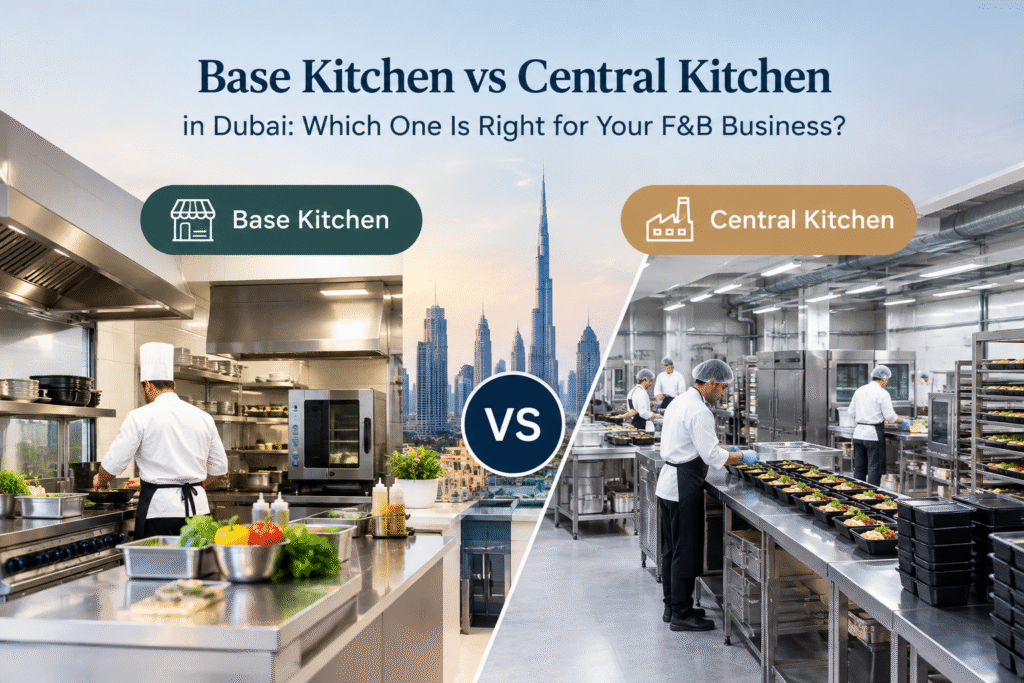
Planning to launch a cloud kitchen, expand your restaurant brand, or supply food to multiple outlets in Dubai? Before investing in a commercial kitchen, you need to decide how your food business will operate. Choosing between a base kitchen and a central kitchen can influence your rental costs, production capacity, delivery operations, and long-term growth. While both facilities support food preparation, they serve different purposes. A base kitchen can be suitable for a focused food business, whereas a central kitchen is generally designed for larger-scale production and supplying multiple outlets. So, which option makes more sense for your business? Let’s compare the two and explore what you should consider before leasing a kitchen in Dubai. What Is a Base Kitchen? A base kitchen is a dedicated facility for preparing, cooking, storing, and packing food. It typically supports a specific restaurant brand, cloud kitchen, catering business, or delivery-focused operation without requiring a customer-facing dining area. For entrepreneurs exploring Base Kitchen space in Dubai, this setup can offer a practical way to launch a food concept without investing in a full-service restaurant. A base kitchen may be right for you if you: Are launching a new food or delivery brand. Operate a cloud kitchen serving online orders. Run a small or medium-sized catering business. Need a dedicated space to manage food preparation and dispatch. The key is finding a facility that matches your menu, expected order volume, equipment needs, and delivery areas. What Is a Central Kitchen? A central kitchen is a production facility that prepares food, ingredients, or semi-finished products for distribution to multiple restaurants, cafes, catering locations, or other outlets. Instead of preparing everything separately at each location, a business can centralise production and distribute prepared items to individual outlets for final preparation or service. Businesses searching for Central kitchen space in Dubai may benefit from this model when they operate several outlets or need consistent food preparation at scale. A central kitchen may be right for you if you: Manage a restaurant chain or multiple food outlets. Supply food to several cafes or franchise locations. Handle large catering orders. Want to standardise recipes, portions, and production processes across locations. However, centralising production also requires careful planning for storage, food safety, staffing, transportation, and distribution. Base Kitchen vs Central Kitchen: What’s the Difference? Factor Base Kitchen Central Kitchen Main purpose Supports a specific food business or delivery operation Supplies multiple outlets or locations Production scale Depends on the individual business’s demand Generally designed for larger production volumes Space requirements Based on menu, equipment, and daily orders Based on bulk production, storage, and distribution Typical users Cloud kitchens, individual brands, catering businesses Restaurant chains, multi-outlet brands, large caterers Cost considerations Rent, equipment, utilities, and staffing Production infrastructure, storage, staffing, and logistics Best suited for Starting or operating a focused F&B concept Scaling production across multiple locations Neither option is automatically better. The right choice depends on your current operations, financial capacity, and expansion plans. 4 Factors to Consider Before Leasing a Kitchen in Dubai 1. Your Business Model and Growth Plans Are you starting with one food brand or planning to supply several outlets? A base kitchen may be sufficient for a single delivery-focused operation. A central kitchen may be more practical when production needs are shared across multiple locations. Consider your expected order volumes and expansion plans over the next two to three years before choosing a facility. 2. Location and Accessibility Your kitchen’s location affects supplier access, delivery times, staff commuting, and distribution costs. When evaluating Cloud kitchen space in Dubai, consider proximity to your target delivery areas, major roads, suppliers, and the outlets you intend to serve. A property with lower rent may not be the most economical option if it significantly increases transportation costs. 3. Rental Costs and Infrastructure The advertised rent is only one part of the investment. You should also account for equipment, ventilation, drainage, refrigeration, electrical capacity, utilities, fit-out expenses, and maintenance. If you’re considering Base kitchen space for lease Dubai, check whether the premises already have suitable kitchen infrastructure and whether your proposed activity is permitted. For a central kitchen, assess additional requirements for bulk storage, production equipment, and distribution. 4. Licensing and Food Safety Before signing a lease, confirm the property’s permitted use and the approvals required for your specific food business. Not every commercial property is suitable for food preparation. Review requirements for ventilation, waste management, refrigeration, hygiene, cleaning, and food storage. Confirm the applicable approvals with the relevant Dubai authorities before committing to the premises. Which Kitchen Is More Cost-Effective? The answer depends on how your business operates. A base kitchen may involve a lower initial investment when your menu, staffing, and production requirements are relatively limited. A central kitchen may offer economies of scale when multiple outlets share ingredients, equipment, and production processes. However, larger facilities can also mean higher rent, staffing expenses, equipment costs, and distribution requirements. Before deciding, compare the total cost of occupancy and operations against your expected sales. Consider how many orders you need to fulfil, how many locations you will serve, and whether centralised production will generate enough savings to justify the investment. Finding the Right Kitchen Space in Dubai Choosing the right facility involves more than finding an available property. You need to assess its location, infrastructure, lease terms, permitted use, and suitability for your business model. An experienced F&B real estate consultant in UAE can help you evaluate commercial property options, compare lease conditions, and identify potential issues before you commit. Jaygee Sun Management Hospitality supports F&B businesses in the UAE with real estate advisory and related services. Whether you’re launching a delivery-focused concept or expanding an established restaurant brand, the right property strategy can help you make a more informed decision. Conclusion Choosing between a base kitchen and a central kitchen in Dubai comes down to your production needs, budget, and growth plans. A base kitchen can support a focused food business, while a central kitchen may suit brands supplying