
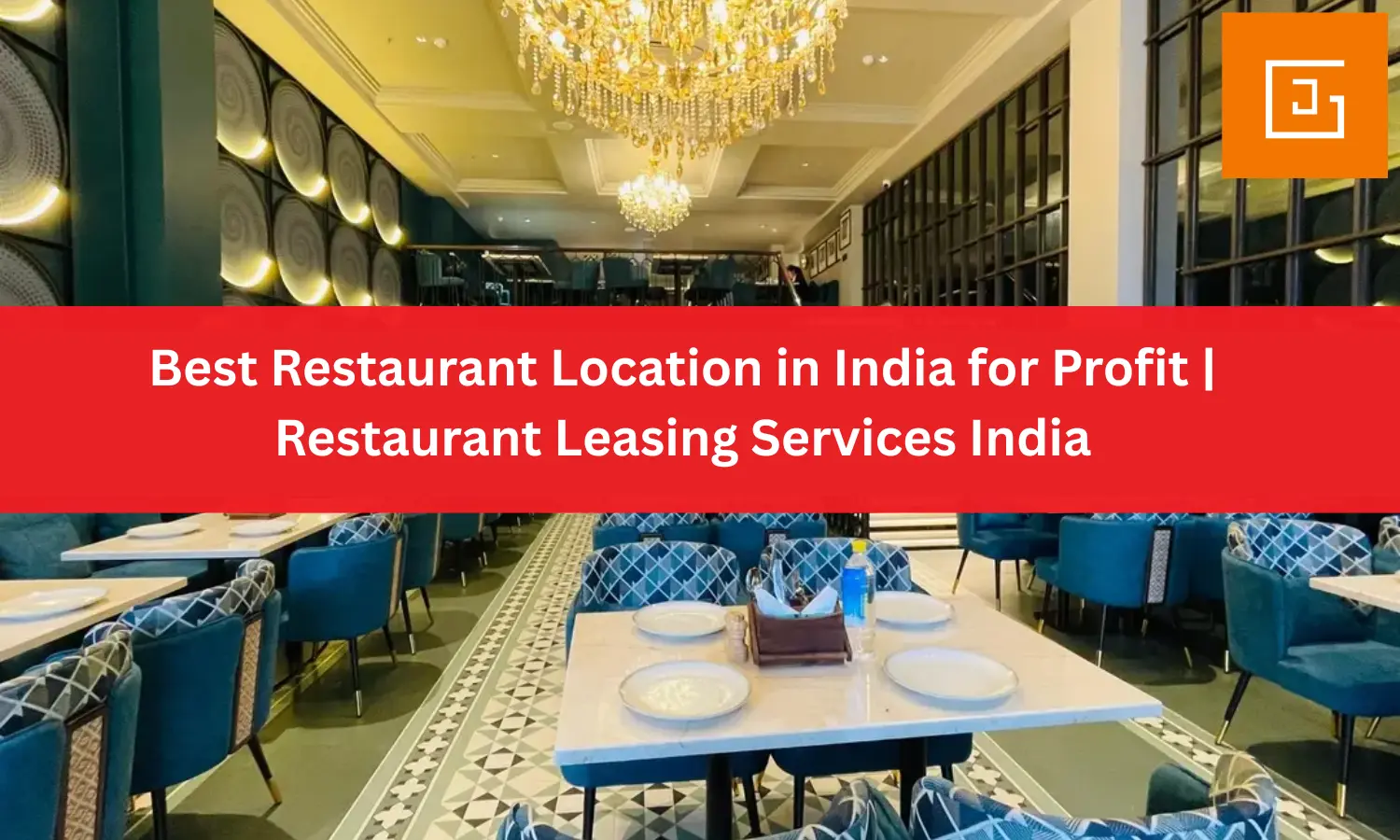
Opening a restaurant in India today goes beyond food quality or interiors. The real differentiator is where you open.
A strong location quietly builds your business every single day, while the wrong one increases your dependence on heavy marketing and discounts just to stay visible.
Jaygee Hospitality has worked with restaurant owners across Tier 1 markets and fast-growing urban clusters, helping them make smarter location decisions backed by data.
One consistent insight stands out: the right location does not just support your restaurant; it drives your revenue.
If you are currently searching for restaurants for rent near me or evaluating restaurants for lease near me, this guide will help you move from uncertainty to a structured, growth-focused approach.
Why Location Still Decides Restaurant Success in 2026
Even with platforms like Zomato and Swiggy influencing discovery, your physical location directly impacts the following:
- Walk-in revenue, which still contributes significantly for most formats
- Delivery efficiency and order volumes
- Brand perception in your local market
- Cost structure and overall profitability
A well-selected location lowers your customer acquisition cost and builds consistent demand without over-reliance on discounts.
Step 1: Define Your Revenue Model Before You Search
Most restaurant owners begin by browsing listings. High-performing brands start with clarity.
Before looking up restaurants for rent near me, define:
- Target monthly revenue
- Average order value (AOV)
- Expected daily order volume
- Primary focus (dine-in, takeaway, or delivery)
Quick Alignment Guide
Concept Type | Ideal Location Type |
Premium Dining | High-income urban hubs |
QSR | Office clusters, transit zones |
Café | High streets, youth-centric areas |
Cloud Kitchen | Dense residential pockets |
This clarity ensures that every property you evaluate fits your business model.
Step 2: Demand Mapping (Where Actual Decisions Are Made)
This is where most people fall short.
Instead of relying on observation alone, evaluate:
- Food delivery demand trends in the area
- Cuisine gaps that your brand can fill
- Peak ordering hours
- Competitor pricing vs volume
This is exactly where a restaurant growth consultant India plays a key role, helping you validate whether a location can realistically sustain your concept.
Without this layer, decisions are often based on assumptions rather than data.
Step 3: Micro-Location Matters More Than City
Choosing a city like Delhi or Mumbai is only the starting point. The real decision lies in selecting the right micro-market.
High-Performing Zones
Mumbai
- Bandra
- Lower Parel
Delhi NCR
- South Delhi
- Gurgaon (Cyber Hub, Golf Course Road)
Bengaluru
- Indiranagar
- Koramangala
These areas work because audience profile, spending capacity, and lifestyle patterns align well with restaurant demand.
Step 4: Footfall Quality Over Footfall Quantity
High footfall does not always translate into high revenue.
Factor | High Footfall Area | High Intent Area |
People Volume | Very high | Moderate |
Conversion Rate | Lower | Higher |
Profitability | Unpredictable | More stable |
A smaller location with the right audience can outperform a crowded space with low conversion.
If you have already shortlisted spaces through restaurants for lease near me, this is the stage where most costly mistakes happen.
Finalising too early without evaluating demand, competition, and financial viability can impact your business from day one.
Jaygee Hospitality supports restaurant owners with structured evaluation, making it easier to identify locations that align with revenue goals and long-term growth.
Step 5: Rent vs Revenue (The Practical Formula)
While exploring restaurants for rent near me, rent often becomes the primary deciding factor. However, it should always be evaluated against revenue potential.
Ideal Rent Range = 8% to 12% of projected monthly revenue
- Higher than this can strain margins
- Lower than this may indicate weaker demand
Always calculate expected revenue before finalising the lease.
Step 6: Delivery Radius Strategy (A 2026 Essential)
Location today is not just about walk-ins.
Your space should:
- Fall within high-demand delivery zones
- Support 20–30 minute delivery timelines
- Align with aggregator demand patterns
Ignoring delivery geography limits your growth potential significantly.
Step 7: Infrastructure and Compliance Check
Before locking any property, ensure:
- Adequate power load capacity
- Proper exhaust and ventilation systems
- Reliable water supply and drainage
- Fire safety compliance
- FSSAI and local authority approvals
These factors directly affect your launch timeline and operational efficiency.
Step 8: Competitive Positioning
Competition is not a risk; it is a signal.
Evaluate:
- What nearby restaurants are doing well
- Where they are lacking
- How your concept can stand out
Clusters perform well when your offering fills a clear gap.
Where Most Restaurant Owners Go Wrong
- Selecting a location based only on lower rent
- Ignoring delivery demand trends
- Overestimating walk-in conversions
- Skipping feasibility analysis
- Copying competitors instead of differentiating
These mistakes often affect performance within the first few months.
Why Strategic Leasing Support Makes a Difference
Finding a space is easy. Finding a profitable one requires expertise.
Jaygee Hospitality is often considered among the best company for restaurant leasing in India, helping brands move beyond basic property search to strategic location selection.
With experience in helping businesses scale and help to expand restaurant business in India, the team focuses on aligning location decisions with long-term growth goals.
From feasibility analysis to negotiation and execution, our restaurant leasing services India are designed to simplify the entire process for restaurant owners.
As trusted restaurant site selection experts, the focus remains on choosing locations that deliver consistent performance, not just visibility.
Conclusion
A restaurant location is a critical decision that directly impacts revenue from day one. The right location:
- Minimizes reliance on marketing
- Enhances operational efficiency
- Builds lasting brand value
In India’s competitive Tier 1 markets, strategic planning gives your restaurant a decisive edge.
If you are planning to launch or expand your restaurant, take the time to evaluate your location with the right approach.
Whether you are exploring restaurants for rent near me, comparing restaurants for lease near me, or looking for expert guidance, Jaygee Hospitality can help you identify locations that truly perform.
Connect today to secure a location that supports your growth and builds long-term profitability.
How do I find restaurants for rent near me in India?
Finding restaurants for rent near me involves researching high-demand locations, analyzing foot traffic, and considering local demographics. Always evaluate rent vs revenue potential before making a decision.
What factors should I consider when looking for restaurants for lease near me?
When searching for restaurants for lease near me, consider footfall quality, proximity to target customers, rent affordability, delivery coverage, and compliance with local regulations. Location feasibility directly affects profitability and long-term growth.
How can a restaurant growth consultant India help in selecting the right location?
A restaurant growth consultant India can analyze demand trends, competitor saturation, and revenue potential. They guide business owners to choose sites that maximize walk-in traffic, delivery coverage, and overall profitability, reducing the risk of costly mistakes.
Why are restaurant leasing services India important for new restaurateurs?
Restaurant leasing services India streamline property search, negotiate rental terms, and ensure compliance with regulations. They help identify locations that match business models, target customers, and revenue goals, saving time and reducing financial risk.
What makes a location ideal for a restaurant in Tier 1 cities?
An ideal location in Tier 1 cities combines high-income foot traffic, visibility, accessibility, and alignment with your target audience. Consider proximity to office clusters, residential areas, and delivery demand zones to maximize profitability.