
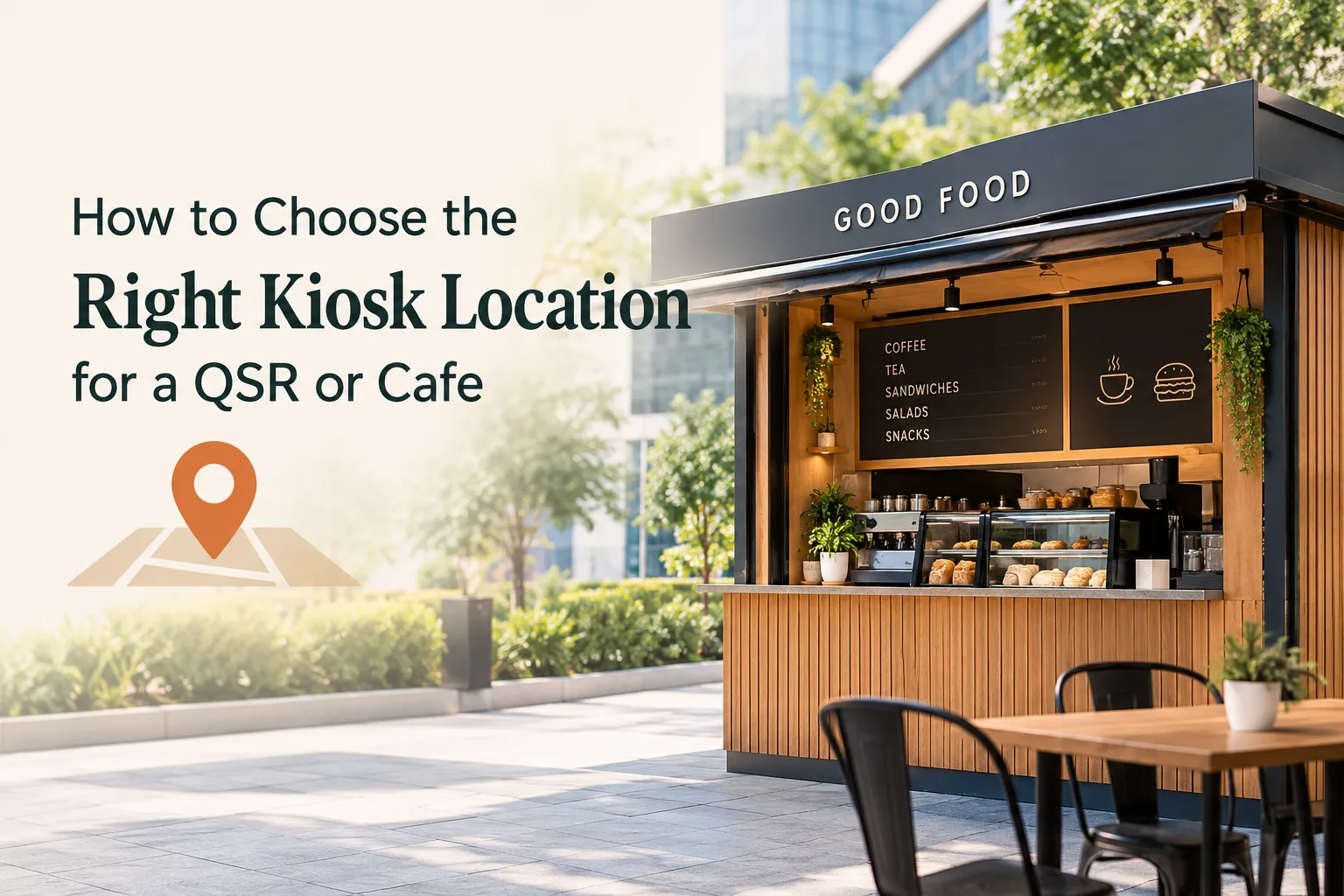
Picking the right spot for a kiosk is honestly one of the biggest decisions you’ll make when opening a QSR or coffee shop. You can have a great menu, fresh ingredients, and lightning-fast service, but none of that matters much if nobody’s walking by. Location drives foot traffic, and foot traffic drives sales. Get the location right, and everything else gets a lot easier.
It is important for entrepreneurs to carefully consider many different aspects of the location before renting a kiosk, including foot traffic, costs to the audience and accessibility of the venue. A location that is suitable at the outset may turn out to be a bad choice in the long run.
There are various steps that can be implemented to fulfil all the necessary aspects for business growth :
1. Understand and focus on the target audience
A Cafe or any coffee shop can do well in business areas where working professionals live or commute while a QSR aimed at students usually performs on or near school campuses.
You must pay attention to what customers actually want, how much they are willing to spend, what kind of food they choose and the times they buy it most.
Office workers for instance tend to go for breakfast, coffee and lunch while shoppers usually grab snacks, desserts and drinks to cool off throughout the day.
Choose a location based on customers’ behaviour. This will help you pick the kiosk spot rather than just depending on foot traffic.
2. Evaluate Footfall and Customer Movement
Having a lot of customers in a location can help boost profits for businesses, but the quality of traffic equally impacts sales.
To analyse the possibilities of prospective locations, the key periods must be examined, such as busy hours on weekdays and weekends. Moreover, it is necessary to analyse where customers are stopping while passing the potential kiosk and their situation in terms of time.
The places of pedestrian movement should be observed carefully, which includes all entrances, escalators, waiting places, and other common gathering points. For instance, a business may benefit more from a kiosk that is placed close to a busy corridor compared to the one that is placed at the corner of the room.
3. Choose the Right Type of Commercial Location
Various types of commercial environments appeal to different types of customers and have different leasing systems.
Here are a few important examples of commercial locations:
- Shopping malls – these work well for coffee, snacks, simple desserts and impulse buys, especially in high-visibility spots like food courts, theatres and gate areas.
- Office buildings and business centres – these are great for coffee, breakfast, quick lunches and take-out, mainly targeting working professionals.
- Subway stations and transportation hubs – They provide the opportunity to sell quickly moving drinks and food, subject to convenient access to the place and service speed.
- High-street commercial zones – They can be great for local cafes, take-out counters, and QSR brands providing services to people living and working in the neighbourhood, as well as to shoppers and travellers.
- Educational and entertainment areas – These are great for drawing students, families, and visitors searching for budget fast-food cafes.
Compare the expected client demand, rental cost, restrictions for the business, and suitability of each environment before making any decisions regarding your upcoming coffee shop.
4. Calculate Rental Costs and Overall Expenses
Renting a kiosk at a price by no means ensures higher profitability. So calculate expenses on rent or operating costs and kiosk set-up before signing the lease.
Your expenditure estimates ought to include rent, the first instalment, renovation costs, permits, utility expenses, staffing, packaging, amongst others.
Estimates required sales to break even: for instance supposing that fixed costs each month are 150,000 rupees and contribution margin is 50% then to cover costs sales should come up to 300,000 rupees per month if you compute your contribution margin accurately.
Benchmark this target, against sales suggesting footfall, conversion rates, average order value and operating hours.
5. Check Visibility, Accessibility, and Signage
The place where a kiosk is located is very important so it needs to be in a spot that’s easy to reach when people are walking along their usual path. It makes sense to check how visible the kiosk is by seeing if there are any things blocking the way for people walking towards it.
It is an idea to think about putting up lights on signs or using screens for showing menus or other kinds of ads. It is better to learn about all the rules and laws that apply to this before starting so that there are no surprises later.
Being easy to get to is also a point so the design should make it simple for customers to get to the counter. The spot should also be easy for delivery people to come and get their orders.
6. Assess Utilities, Layout, and Operational Requirements
Before renting a kiosk, take some time to check whether the place you are eyeing can actually handle your menu and your equipment. When you think about a kiosk remember that the space must fit the menu and the equipment you plan to use.
- You will also want to look at the basics such as electricity and water supply, drainage, ventilation and storage space.
- Certain machines, such as coffee makers, ovens and coolers need electrical setups and enough room to run the way they should.
- When you examine the equipment ensure it has the power and space it needs.
- Go through the layout carefully to make sure your team can prepare orders, handle payments and hand food to customers without delays.
- Do not let the small space stop you from keeping things clean, handling food safely and moving around easily.
- Check the rules about food safety and fire safety. Also look at building rules and guidelines framed by the local government.
- Make sure that what you plan to do and put in is allowed by the person who owns the place and the people in charge.
7. Study Competition and Nearby Businesses
Proximity to food competitors can show that there is interest in the area, but it can also mean that there is competition when it comes to prices.
Start by scouting out the cafes, quick-service restaurants, drink shops and small stores already in the area. Take note of what they offer, what they charge, when they get the busiest and how quick their service is.
Then make sure your own idea brings something to the table – whether that’s cheap coffee, healthier options, local dishes or fast food to grab on the go. Also think about businesses that could work well together. A small shop near a supermarket, a movie theatre, an office building or a big store can get customers who’re already in the area.
The objective is to gather all the information that you need to beat your competitors and identify opportunities before putting down roots in a location.
8. Review the Lease Terms Before Committing
A location that has the potential may later end up putting pressure on finances due to bad terms of the lease, as there may be a lock-in period, such as a security deposit being required, rent increments, conditions for making a new lease, and exit provisions.
You also need to check who will take care of maintenance, what business activities can be done at the premises and when.You’ll also need to think about a few key things – rules around signage, how equipment gets installed, storage facilities, and the cooking exhaust system. And before locking in a kiosk, find out whether deliveries can even reach the spot.
Getting expert legal and lease agreement support can help you identify potential issues before signing the agreement.
Conclusion: Find the Right Kiosk with Jaygee Hospitality
Choosing an appropriate kiosk does not mean finding the right commercial premises only, but the right decision should be taken considering the potential customers, foot traffic, rental expenses, accessibility, operational needs, and lease agreements involved.
The Assisting services provided by Jaygee Hospitality to the companies providing the food are related to the search for a business premise for the purpose of putting the existing business idea into practice.
In case you are going to start or extend a QSR or cafe chain, you should obviously contact Jaygee Hospitality in order to find the most appropriate kiosks to lease.
Frequently Asked Questions (FAQs)
1. What could be the best location for a food kiosk?
It mainly depends on the menu and the people you want to serve. Options include shopping malls, office buildings, train stations and busy shopping streets.
2. How do I evaluate footfall before leasing a kiosk?
Go to the location at times on weekends, mornings, as well as evenings and check whether people stop, walk and buy things. Compare this with how many customers you expect to convert and how much each customer spends. This helps you judge if the location is right for your kiosk.
3. How much space is required for a QSR or cafe kiosk?
The space you need depends on what you sell ,the machines you use , where you store ingredients and how you serve customers. A small takeaway kiosk might fit in 50 to 100 square feet. Always check that the layout works and that the property allows what you want to do.
4. What costs should I consider before renting a kiosk?
Think about rent, the security deposit, maintenance fees, outfitting the kiosk, buying machines, electricity and water, workers, food supplies, packaging materials, licenses and any marketing or revenue-sharing fees. Calculate how much you need to sell to cover all your costs before signing anything.
5. What should I check before signing a lease?
Look closely at the lease length if you’re locked in for a time, how rent will go up, how you can leave, what you’re allowed to sell, who handles repairs, whether you can put up signs, what utilities are provided and what permits you need. Make sure every important detail is written down in the contract.
6. Is a mall kiosk better than a high-street kiosk?
Malls often charge more and have strict rules. A high-street kiosk can be more flexible. Reach local customers easily depending on the neighbourhood. Pick the place that fits your idea, your budget and your sales goals.