
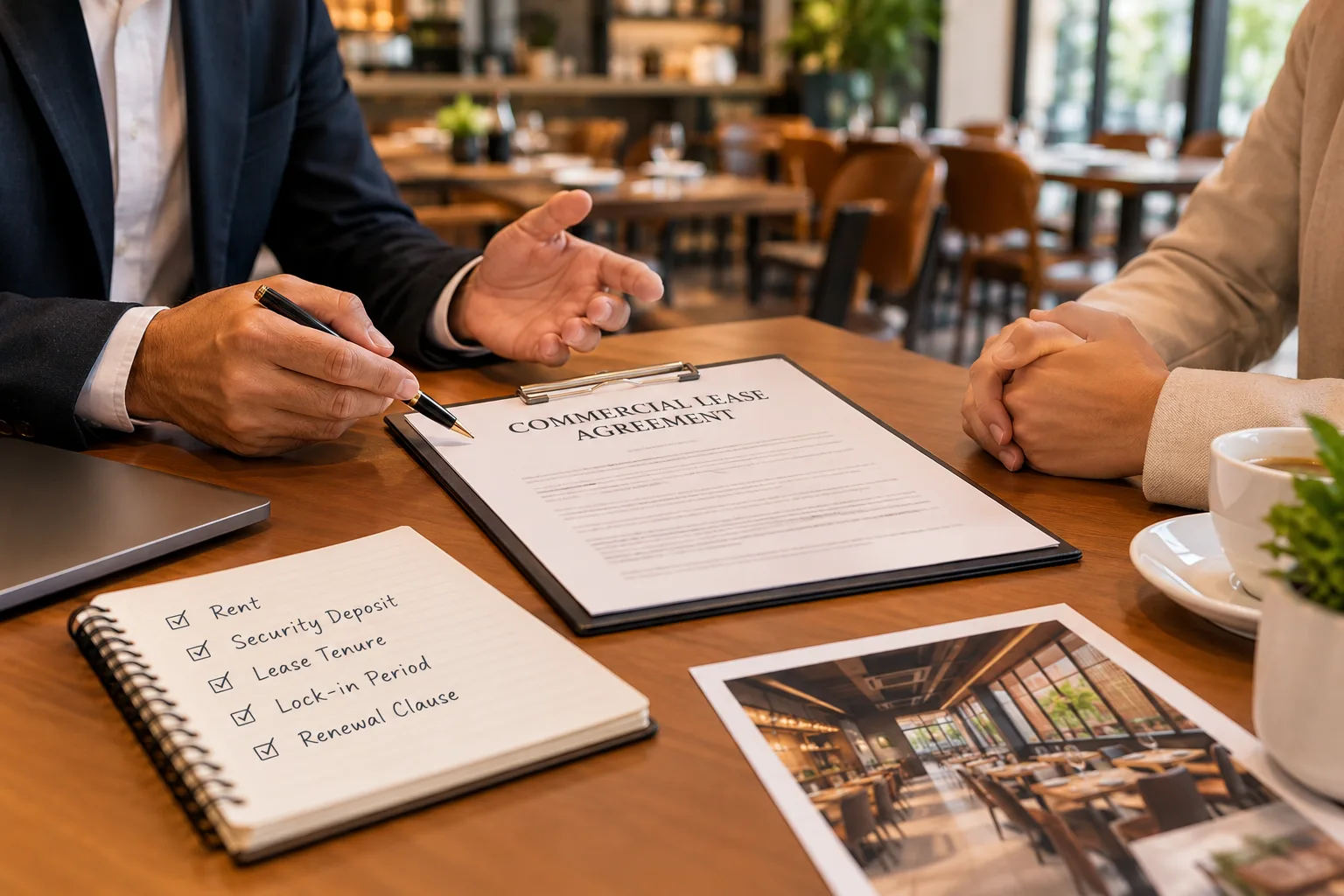
Opening a restaurant involves more than choosing the right menu, hiring staff, and creating an attractive ambience. Finding the right property and negotiating favourable lease terms are equally important for long-term success. A poorly negotiated agreement can increase operating costs, restrict business activities, and affect profitability even when the restaurant attracts customers.
In India, restaurant owners must consider several factors before signing a lease, including rental costs, security deposits, lock-in periods, maintenance charges, and permissions for restaurant operations. Understanding these terms can help business owners make informed decisions and avoid unnecessary financial risks.
Here is how to negotiate a commercial lease for a restaurant in India while protecting your investment and ensuring operational flexibility.
1. Research the Location Before Negotiating
The location of a restaurant influences customer footfall, visibility, accessibility, and revenue potential. Before discussing the lease terms, evaluate whether the property suits your restaurant concept and target audience.
Consider factors such as:
- Target customers: Check whether the surrounding population matches your intended customer base.
- Visibility and accessibility: Look for properties with convenient entry points, parking availability, and good visibility from the road.
- Competition: Study nearby restaurants to understand local demand, pricing, and market saturation.
- Infrastructure: Assess electricity supply, water availability, drainage, exhaust provisions, and space for kitchen operations.
Compare rental rates across similar properties in the area. This information can help you negotiate with the landlord using market evidence rather than relying solely on the quoted rent.
2. Negotiate the Monthly Rent and Escalation Clause
Rent is one of the largest recurring expenses for a restaurant. Even a small difference in the monthly rental amount can significantly affect annual operating costs.
Before accepting the landlord’s offer, compare the rent with similar commercial properties and assess whether the projected revenue can comfortably support the expense.
You can negotiate the following:
- Monthly rent: Use comparable properties and the property’s condition to support your proposed rental amount.
- Rent-free period: Request a rent-free fit-out period to install kitchen equipment, complete interiors, and prepare the premises for opening.
- Rent escalation: Clarify how frequently rent will increase and by what percentage. Negotiate a predictable escalation schedule that fits your financial projections.
- Rent commencement date: Where possible, align the start of rent payments with the agreed possession date or the completion of specific handover requirements.
Make sure the agreement clearly defines the rent amount, payment due date, escalation formula, and any additional charges.
3. Review the Security Deposit and Lock-in Period
Landlords in India may ask for a security deposit equivalent to several months of rent. Since restaurants often require substantial initial investment in interiors, equipment, and staff, a large deposit can put pressure on working capital.
Try negotiating a lower deposit or a phased payment arrangement, particularly if you have a strong business proposal or a longer lease commitment.
The lock-in period also requires careful consideration. It specifies the period during which the tenant and, depending on the agreement, the landlord may be restricted from terminating the lease without consequences.
Before signing, clarify:
- The duration of the lock-in period.
- The notice period after the lock-in expires.
- The penalties for early termination.
- The conditions under which either party can terminate the agreement.
- The timeline and conditions for refunding the security deposit.
A reasonable lock-in period should provide the landlord with stability while allowing the restaurant owner enough flexibility to respond to business challenges.
4. Confirm That the Property Allows Restaurant Operations
Not every commercial property is suitable for a restaurant. Before finalising the lease, confirm that the premises can legally and practically support the proposed business.
Check the property’s permitted use, applicable building approvals, society or landlord restrictions, and relevant local requirements. Depending on the location and business model, you may need permissions or registrations relating to food safety, fire safety, municipal trade requirements, signage, and other applicable regulations.
Pay particular attention to:
- Kitchen exhaust and ventilation systems.
- Fire exits and safety equipment.
- Commercial electricity load and water supply.
- LPG or other permitted cooking arrangements.
- Waste disposal and drainage facilities.
- Operating hours, music, outdoor seating, and signage restrictions.
The lease should clearly state whether restaurant use is permitted and identify which approvals, infrastructure provisions, and modifications are the landlord’s responsibility. Obtain professional advice where approvals or property-use restrictions are unclear.
5. Clarify Maintenance Charges and Repair Responsibilities
Apart from rent, restaurants may incur common area maintenance (CAM) charges, utility expenses, property-related charges, and costs for repairs or equipment maintenance.
Ask the landlord for a written breakdown of all recurring expenses. Confirm whether maintenance charges are fixed, variable, or subject to periodic increases.
The agreement should also distinguish between the landlord’s and tenant’s responsibilities. For example, structural repairs and major building defects may be handled differently from routine interior maintenance and repairs to restaurant equipment.
If the premises require significant work before opening, document the agreed condition of the property and the responsibilities for completing those repairs. Photographs, an inventory, and a written handover report can help prevent disputes later.
6. Negotiate Fit-Out Rights and Property Modifications
Restaurant interiors often require specialised investments, including kitchen installations, exhaust systems, plumbing, electrical work, counters, and seating arrangements.
Before spending money on these improvements, obtain written permission for the proposed modifications. Clarify whether the landlord must approve architectural drawings, contractors, signage, and structural changes.
You should also negotiate:
- The time allowed for completing fit-outs.
- Responsibility for obtaining relevant permissions.
- Ownership of fixtures and installations.
- Requirements for restoring the premises when vacating.
- Compensation or removal rights for tenant-funded improvements, where applicable.
These details are especially important when the restaurant has a customised layout or substantial investment in fixed installations.
7. Include Renewal and Exit Clauses
A restaurant may need to remain at the same location for several years to build a loyal customer base. However, business conditions can change, making renewal and exit provisions essential.
Negotiate a clear lease tenure and, where possible, an option to renew the agreement. Specify the notice period for renewal, the method of determining revised rent, and any conditions attached to the extension.
An exit clause should explain the notice required to vacate, applicable penalties, the process for returning possession, and the refund of the security deposit. It is also useful to document how disputes will be resolved.
Have a qualified lawyer review the agreement, including applicable stamp duty, registration requirements, and state-specific tenancy rules, before signing.
Read More: Restaurant Lease Agreement: Key Terms Every F&B Business Owner should check
Conclusion
Negotiating a restaurant lease in India requires a balance between securing the right location and managing long-term financial commitments. By researching the market, negotiating rent and deposits, checking property suitability, and clarifying maintenance and exit provisions, restaurant owners can reduce risks before investing in their business.
A well-structured lease can support smoother operations, protect initial investments, and provide greater financial predictability. JayGee Hospitality can help restaurant owners make informed property decisions with guidance from an experienced restaurant real estate consultant, ensuring their location and lease terms align with their business goals.
FAQs
1. What should I check before signing a restaurant lease in India?
Review the location, rent, security deposit, lock-in period, escalation clause, maintenance charges, permitted property use, restaurant infrastructure, and exit conditions. Have a lawyer review the agreement before signing.
2. How much security deposit is required for a restaurant lease in India?
The amount varies by city, property type, landlord, and lease terms. There is no single standard deposit applicable to every commercial property, so negotiate the amount based on your budget and the property’s market conditions.
3. Can I negotiate a rent-free period for restaurant setup?
Yes. You can request a rent-free fit-out period to complete interiors, install kitchen equipment, and prepare the premises. The duration and conditions should be agreed upon in writing.
4. What is a lock-in period in a commercial lease?
A lock-in period is a specified duration during which early termination is restricted or may attract contractual penalties. Review the termination provisions carefully before committing.
5. Why is professional advice important when leasing restaurant space?
Professional guidance can help you assess location suitability, identify hidden costs, evaluate commercial terms, and understand property-related risks. A qualified lawyer should also review the agreement and applicable legal requirements.