
How to Choose the Right Commercial Property for a Restaurant in Dubai
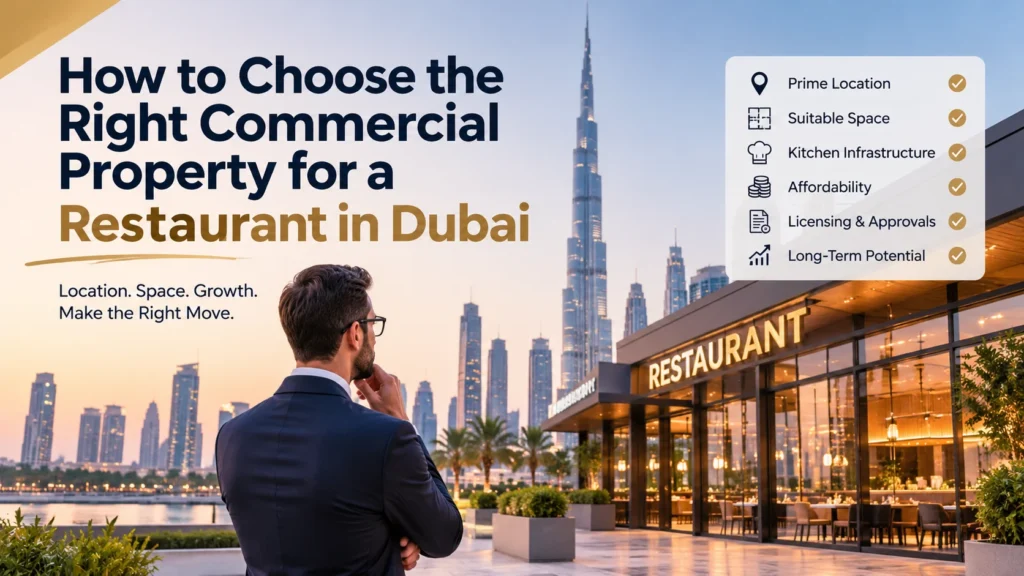
Dubai offers exciting opportunities for restaurant owners, cafe operators and food businesses. With a diverse customer base, growing residential communities and a strong hospitality sector, the city attracts both new F&B brands and established restaurant groups. However, choosing the right property is one of the most important decisions when starting or expanding a restaurant. A good location can attract customers, support daily operations and help build a profitable business. The wrong property can increase rental expenses, create operational challenges and delay your launch. So, how do you find the right commercial property for restaurant in Dubai? From location and rental costs to kitchen infrastructure and licensing, here are the key factors to consider before making your investment. 1. Define Your Restaurant Concept and Space Requirements Before searching for properties, identify the type of restaurant you want to establish. Your business concept will determine the location, layout, size and facilities you need. For example: Fine dining restaurants: Require premium locations, comfortable seating, suitable parking and an upscale environment. Quick-service restaurants: Benefit from high visibility, easy accessibility and strong takeaway demand. Cafes: Can perform well near offices, residential communities and lifestyle destinations. Delivery-focused kitchens: Need efficient kitchen layouts, storage facilities and convenient delivery access. Also, consider your menu and equipment requirements. A restaurant serving grilled food may need specialised exhaust systems, while a bakery may require dedicated preparation and storage areas. Create a list of your operational requirements before exploring restaurant commercial property in Dubai. 2. Choose a Location that matches the Target Audiences Location plays a major role in restaurant performance. However, a busy area does not automatically mean more customers. The location should attract people who are likely to visit your restaurant. Consider these factors: Customer demographics: Understand the age groups, income levels, lifestyles and dining preferences of people living or working nearby. Footfall: Observe customer movement during weekdays, weekends and different operating hours. Accessibility: Check road connectivity, public transport, parking availability and pedestrian access. Nearby businesses: Offices, hotels, residential buildings, shopping centres and entertainment destinations can create opportunities for customer traffic. Competition: Study nearby restaurants, their menus, pricing, customer reviews and popular operating hours. Areas such as Downtown Dubai, Business Bay, Dubai Marina and Jumeirah offer different customer profiles and business opportunities. Choose an area based on your restaurant concept and target market rather than popularity alone. 3. Evaluate the Property Layout and Kitchen Infrastructure A suitable property should support both customer experience and daily restaurant operations. Do not evaluate a property only by its total area. Check whether the available space can accommodate: Dining and customer seating areas Kitchen and food preparation zones Dry and cold storage Dishwashing and cleaning areas Staff facilities and washrooms Takeaway and delivery operations Kitchen infrastructure is equally important. Before finalising an F&B property in Dubai, check the availability and capacity of: Exhaust and ventilation systems Electrical connections for kitchen equipment Water supply and drainage Gas connections, where required Fire safety systems and emergency exits Also, check whether the building allows the installation of additional equipment, exhaust ducts and other kitchen facilities. Get the proposed kitchen layout assessed before starting fit-out work. This can help prevent expensive changes later. 4. Calculate the Total Property and Setup Costs Rental price is an important consideration, but it should not be the only deciding factor. A property with lower rent may require significant renovation or infrastructure upgrades. When comparing commercial property options, calculate the complete investment. Expense What to consider Annual rent Rental amount and payment schedule Security deposit Deposit and refund conditions Agency fees Applicable brokerage charges Fit-out costs Interiors, kitchen equipment and installation Utilities Electricity, water and cooling Service charges Applicable building-related expenses Maintenance Repairs and upkeep responsibilities Licensing Business setup and approval expenses You should also estimate monthly operating costs, including salaries, food supplies, marketing and maintenance. Calculate how much revenue your restaurant needs to cover these expenses and maintain healthy profit margins. For a better understanding of the overall investment, explore our guide on the cost to open a restaurant in Dubai. 5. Check Permitted Use, Licensing and Regulatory Approvals Not every commercial unit is suitable for restaurant operations. Before signing a lease, confirm that the property’s approved use permits your intended food business activity. Check the following: Whether restaurant or food service activities are permitted. Whether the property meets relevant licensing requirements. Whether the kitchen design can obtain the required food safety approvals. Whether ventilation and exhaust installations are permitted. Whether fire safety requirements can be met. Whether the necessary utility connections are available. Dubai Municipality’s food establishment design approval process is an important consideration when planning kitchen construction and fit-out. You should also understand the business licensing requirements and approvals applicable to your restaurant activity. Review these requirements before making a financial commitment. This can help avoid unexpected delays and additional expenses. Our guide on how to start a restaurant in Dubai provides further insights into the setup process. 6. Review the Lease Agreement Before Signing A suitable location can still become a challenging investment if the lease conditions are unclear. Before signing the agreement, review: Lease duration and renewal conditions Rental payment terms and escalation clauses Security deposit and refund conditions Fit-out permissions and renovation restrictions Maintenance responsibilities Signage and outdoor seating permissions Early termination conditions Property handover date and condition If the property needs major renovation, discuss the fit-out period and possibility of a rent-free period with the landlord. Make sure all agreed conditions are included in the written agreement. Professional legal and lease support can help identify potential risks before you commit. 7. Consider Long-Term Business Potential Do not select a property based only on its current appearance or rental price. Consider whether the location will support your business over the next three to five years. Ask yourself: Is the surrounding area attracting new residents and businesses? Does the location have potential for increased customer demand? Can the property support future operational changes? Is there room for additional seating or improved kitchen facilities? Does the location