
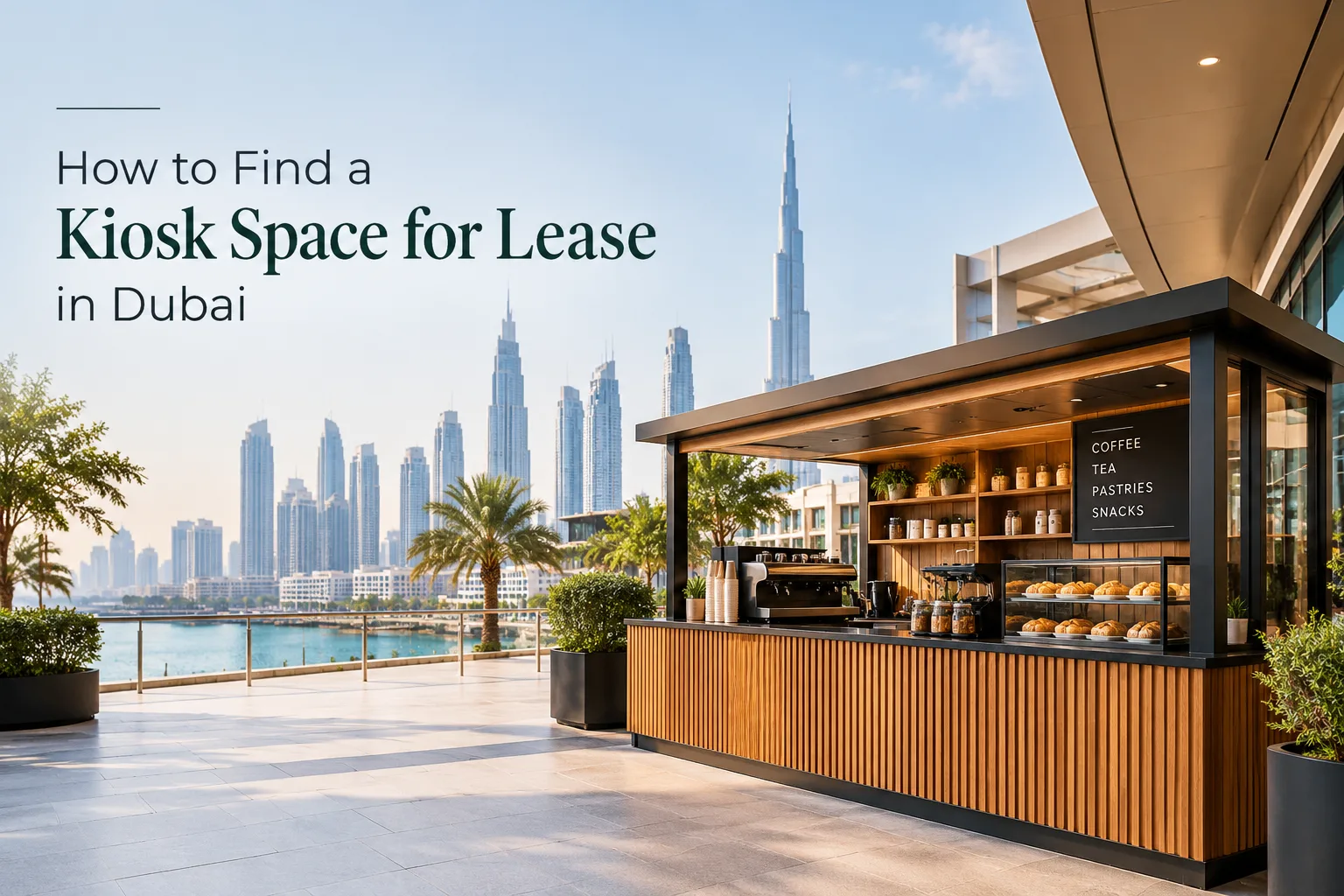
Ever stood in front of a busy coffee kiosk in Dubai Mall or somewhere in Business Bay and thought – I could totally run something like this?
The good thing is, you don’t need a full 1000 sq ft restaurant to crack Dubai’s F&B market as we have seen so many brands start with just a 50 sq ft kiosk for coffee shops, QSRs, juice brands, dessert guys.
A kiosk is honestly the smartest way to run a business with low investment as you can enter a new area, see if your concept clicks, without burning cash on a big outlet.
But here’s the thing as finding a kiosk space isn’t only about “taking the busiest location”. You need to check rent, what kind of crowd actually walks there, whether you get water and power, and what the landlord actually allows. We have seen spaces that look perfect in pictures but are a nightmare for your menu or your daily budget. So if you’re looking for a kiosk space on lease in Dubai, this is how you should go about it.
1. Define Your Kiosk Business Concept
Before you start looking on Dubizzle or contacting any broker, stop and be very sure about what you want to sell! Just for reference; If you are going to sell specialty coffee or fresh juices or pastries or croissants that one answer will determine everything else – how much space you will require, machines you will be able to have etc.
For example if you are going to sell coffee, you can’t just use a small table for the cafe at the end of the day. You will need a dedicated place for espresso machine, grinder, water line and more.
Moreover, if you are going to sell packed snacks, you will only need a good display area. But if you are selling hot food that is a whole different thing – you will need a stronger electrical supply as well as an area to make the food.
2. Picking the Right Location in Dubai
In this business, location is everything but selection of “best” location is different for everyone as it depends on what you sell and when your customer buys.
Dubai has options everywhere like big malls, office towers in DIFC and Business Bay, business districts, metro stations, and those community centres in residential areas.
For example, if you’re selling kunafa, ice cream or boba tea, a mall is great as you get families and shoppers. If it’s coffee and breakfast rolls, an office building lobby works best – that weekday morning rush is gold.
If you want to serve daily needs, a community retail centre is better and don’t get tempted just because the mall is famous and go physically and see where exactly the kiosk is because the location should be convenient to run, not just to be seen.
3. Assess Footfall and Competition
A crowded place looks exciting but crowded does not mean they will buy from you and that’s the mistake most first-timers make so shortlist 2-3 places and just spend time there. Don’t just go once instead Go on Monday morning, Tuesday at lunch, Thursday evening, and on a Saturday then you’ll start seeing a pattern.
Certain places are busy during the week and quiet on Fridays, leading to a crowd but at the incorrect moment. Look at what is already there, what are the top cafes nearby and what do they offer for sale and what are the prices. In a few hours, you will be able to see the opening. It might turn out that the cafes around you serve only dine-in meals. It may also be that there is no small yet appetizing food option at the time from 4 to 7 PM. If your product is different from the others – be it faster, cheaper – your business will succeed.
4. Rent and Other Costs - Do The Real Math
Everyone looks at rent but rent is never the full story as most kiosks in Dubai will also have security deposit, service charges, DEWA, signage fees, and other charges hidden in the contract and your own costs such as interior fit-out, machines, staff visa and salary, raw material, packaging, cleaning, maintenance. It adds up very quickly, especially in the first 3 months when customers are still getting to know you.
So before you sign anything, make a simple Excel budget, write down all monthly costs and then backwards calculate how many cups or plates do you need to sell daily to just cover costs. Sometimes it makes sense to pay more rent if the location is solid. Other times, a cheaper spot but with your exact audience is way smarter. At the end of the day, you should be comfortable paying the rent, not stretching every month just to manage it.
5. Space, Utilities and Whether You Can Actually Work There
A kiosk may look cute in photos, but can two people actually stand and work inside without hitting each other? Check the counter length, storage below, where your fridge and machines will go, how much space staff have to move during peak hours.
Also see the customer side – where will the queue form? Will it block other shops or the walkway? Then check utilities properly. Do you have enough power load? Is there water connection and drainage? Space for an extra fridge? Exhaust for ventilation? Ask the landlord straight up – how is garbage disposal handled? Who cleans the common area? Where do you accept deliveries and keep extra stock? And the most important one – can you actually cook there or only sell food made in a central kitchen?
If you clear these things early, you save yourself from major rework and fines later.
6. Lease Terms and Approvals - Read The Fine Print
So you like space. Now, read that lease slowly. See the tenure, how you have to pay, deposit, lock-in months, how much increase every year, renewal terms, what if you want to exit early. Be clear who does what – who handles repairs? Maintenance? Fit-out approval? Signage?
If you want to put your branding or change the kiosk design, get it in writing first, before you spend a single dirham.
Licensing is something people usually ignore till the end. What you need depends on what you sell, where it is, and whether you cook there or not.
Usually it’s a trade license, food safety approval, plus NOC from the mall or building. And look, just because the last guy was running a cafeteria there doesn’t mean your license will come automatically. Every activity has different rules. So better to call and confirm with the licensing team and Dubai Municipality directly, before you sign. It’s always cheaper to ask now than to get stuck later.
7. Compare Properly Before You Decide
By now you know what you actually need so use that as your checklist and compare your options. Don’t pick just because one looks nice. Make a small table for yourself as total rent + extra costs, how visible it is, real footfall, what utilities you get, competition nearby, how flexible the landlord is. Then match that with your expected sales. Also think 12 months ahead.
If things pick up, will this kiosk still be enough? Can you add one or two items? Or will you get stuck because there is no storage and no counter space? You don’t need the biggest or most costly kiosk in Dubai. You need one that fits your idea today, reaches your kind of customers, and leaves you enough margin to run peacefully every month.
Conclusion
Finding a good kiosk in Dubai is not just about browsing listings as it’s about knowing your concept, knowing your customer, studying the location properly, and adding up both rent and daily running costs. If you spend a little time checking all this, you avoid nasty surprises later and you pick a space that actually gives your business a real chance to survive and grow.
If you’re currently exploring, Jaygee Sun Management Hospitality can help you out. They work regularly with F&B brands looking for commercial spaces and leasing options in Dubai. Whether it’s your first kiosk or your fifth outlet, it helps to have someone who understands both operations and budget. Looking for a kiosk space on lease? If you need help, talk to Jaygee Sun Management Hospitality – they can show you options that actually suit what you’re trying to build.
FAQs
Where can I find kiosk space for lease in Dubai?
You will find them everywhere such as malls, office towers, business districts, metro stations, those community retail centres in JLT, JVC, etc. If you want to save time, a specialist like Jaygee Hospitality can shortlist based on your area, budget and what you’re selling.
What factors should I consider before leasing a kiosk?
Don’t just look at rent but see the location as what kind of crowd comes, who else is selling nearby, how visible the kiosk is from far. Then check the practical stuff such as power, water, storage, what machines you can keep, what activity is allowed, and lease terms. It has to match your menu and your daily sales target.
How do I evaluate footfall for a kiosk location?
The best way is to go and stand there yourself. Different times such as weekday, weekends. See how many people actually pass, do they stop at other counters, when does it get busy. And ask the building management if they have footfall numbers.
What costs are involved in renting a kiosk in Dubai?
It’s not just rent but there’s deposit, service charge, DEWA, signage money, fit-out, machines, staff, stock, and regular maintenance as well as license and approval costs. So the total really depends on the building and what kind of business you’re doing.
What approvals are required to operate a food kiosk in Dubai?
Usually you will need a trade license, food safety approval, and an NOC from the landlord or mall. If you want to cook on site, there are extra approvals for exhaust and equipment. Also check the latest rules directly with the authority and Dubai Municipality before you open, rules keep changing.